

What happens when thousands of off-road enthusiasts, manufacturers, builders, racers, and powersports brands come together in one place? You don't just get a trade show. You get a preview of where the off-road industry is heading.
That is what makes the Sand Sports Super Show, taking place September 18–20, 2026, at the OC Fair & Event Center in Costa Mesa, California, worth paying attention to. The event brings together ATVs, UTVs, side-by-sides, sand rails, accessories, performance products, and the people behind them, creating one of the biggest gatherings of the sand and off-road community. With hundreds of exhibitors expected, the show provides a unique look at the technologies and build trends influencing modern off-road machines.
Off-Road Riding Is Becoming More Specialized
The modern ATV or UTV is no longer being modified according to a single formula. Riders are building machines around the terrain they enjoy, whether that means dunes, desert trails, technical terrain, racing, or long-distance exploration.
That shift has changed the way people think about aftermarket parts.
A larger tire can improve traction, but it can also change the loads placed on the drivetrain. A lift kit can create additional ground clearance, but it can also change suspension geometry. Long-travel suspension can dramatically improve a machine's ability to handle rough terrain, but it also changes how connected components operate.
The result is a more thoughtful approach to vehicle building.
The best modern UTV builds aren't simply made from the strongest parts available; they are built from parts that make sense together.
Long-Travel Suspension Is Changing the Game
Long-travel suspension is one of the clearest examples of this evolution. By allowing the suspension to move through a greater range, these systems can help a UTV handle larger changes in terrain while maintaining better control over rough surfaces.
For dune riders, that additional movement can make a significant difference.
However, the suspension doesn't work alone. When suspension travel increases, the components connected to it have to accommodate that additional movement. The axle still has to transfer power to the wheels while operating through suspension positions that may be considerably different from a stock configuration.
This is where the XHD Long Travel Axle becomes part of the bigger story.
An XHD Long Travel Axle is designed around the demands of long-travel applications, where increased suspension movement and aggressive riding can place different requirements on the driveline. Rather than viewing an axle as just another replacement part, performance-oriented builders can consider it as one piece of a complete suspension and drivetrain setup.
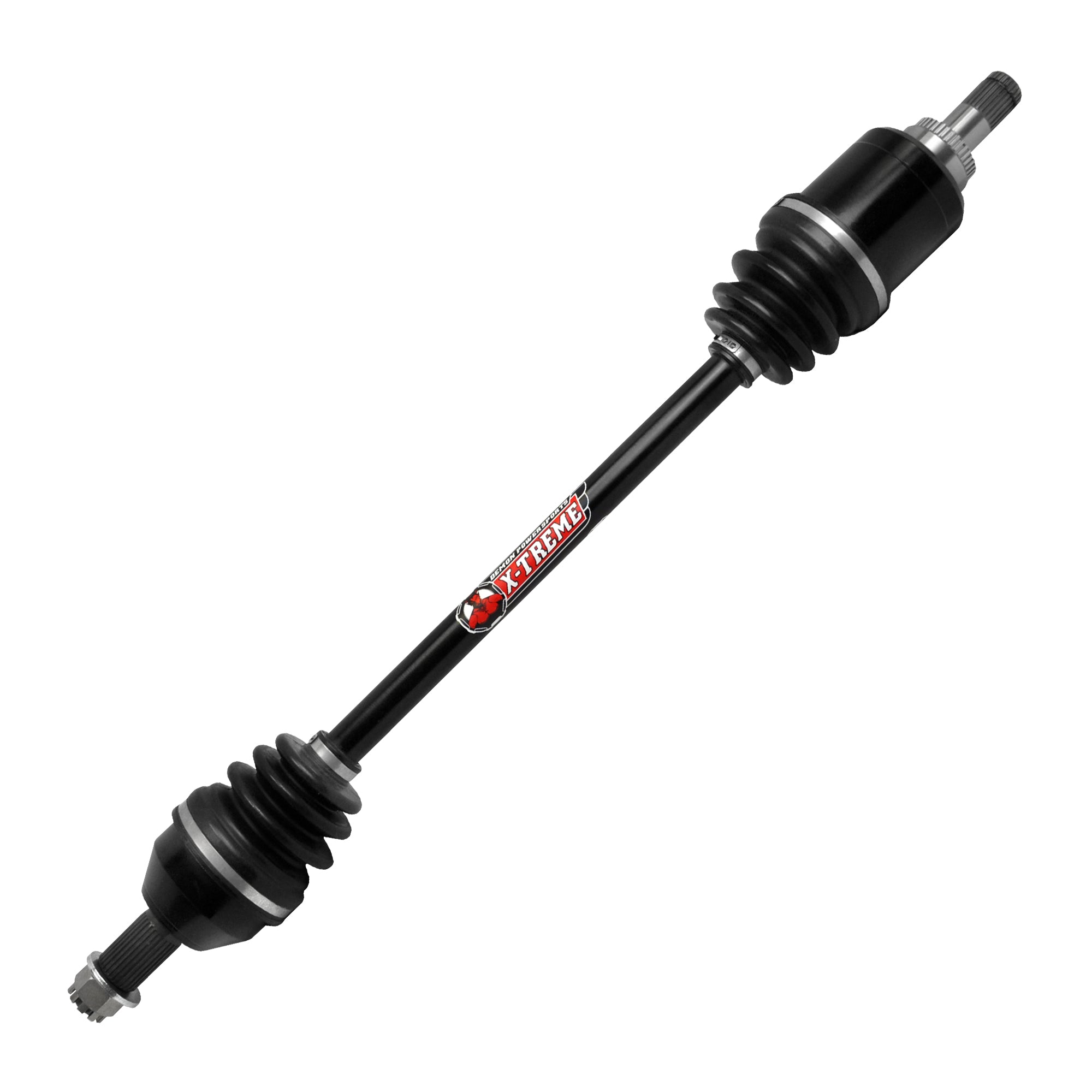
That reflects a broader trend in the industry: as UTVs become more specialized, the components supporting those builds are becoming more specialized too.
Why Sand Is Such a Good Test
The Sand Sports Super Show is particularly relevant because sand riding can expose the strengths and weaknesses of a machine quickly.
Dune riding may look smooth from a distance, but a UTV moving through loose sand is constantly responding to changing conditions. The driver manages throttle and steering while the suspension repeatedly responds to the terrain, and the drivetrain continues delivering power as traction changes beneath the tires.
When larger tires, increased suspension travel, and aggressive riding are added to the equation, those demands can become even greater.
Sand may look soft, but serious dune riding can be surprisingly demanding on a UTV.
This is one reason the sand community has historically played such an important role in aftermarket innovation. Riders push machines into challenging environments, discover where existing components reach their limits, and create demand for solutions designed around those conditions.
The Biggest Changes Aren't Always Visible
Walk through an event like the Sand Sports Super Show and the first things you notice will probably be the obvious modifications: enormous tires, long-travel suspension, custom wheels, powerful engines, and impressive bodywork.
But some of the most important developments are hidden underneath.
A larger tire can affect drivetrain loads. More suspension travel changes component movement. Additional equipment adds weight. Aggressive riding increases stress throughout the vehicle.
This is why experienced builders increasingly look at their UTV as a complete system rather than a collection of independent upgrades.
A high-performance suspension setup needs supporting components that can work with it. A powerful drivetrain needs components capable of transferring that power reliably. Improved steering and braking systems need to complement the additional capability of the machine.
Performance Is Becoming More Than Horsepower
Another important trend visible at major off-road events is the changing definition of performance.
Horsepower will always attract attention, but today's riders are also interested in suspension control, steering feel, durability, comfort, efficiency, and technology. Recent Sand Sports Super Show coverage has even highlighted electric UTV demonstrations, showing that alternative powertrains are beginning to become part of the off-road conversation.
That doesn't mean traditional ATV and UTV platforms are disappearing. It means the industry is expanding the definition of what an off-road machine can be.
Future builds may combine advanced suspension systems, specialized driveline components, improved steering technology, new powertrains, and increasingly sophisticated electronics.

What the Sand Sports Super Show Tells Us
The real value of the Sand Sports Super Show is that it brings all these developments together. Riders can see what manufacturers are creating, what builders are experimenting with, and what the off-road community is demanding from its machines.
The rise of long-travel suspension shows that riders want greater capability over difficult terrain. Products such as the XHD Long Travel Axle demonstrate how supporting driveline components have to evolve alongside those suspension systems. New steering and vehicle technologies show that control, comfort, and efficiency are becoming just as important as raw power.
When you look at those trends together, the direction becomes clear.
The future of off-road riding isn't simply about making machines bigger, faster, or stronger. It is about making them more capable, better balanced, and better matched to the terrain and the rider.
That is why the Sand Sports Super Show matters. It isn't just a place to see what the industry is selling today. It is a place to see the ideas that could influence what riders build, ride, and demand tomorrow.


