

The Polaris RZR Turbo S was never designed to spend its life taking easy rides around the neighborhood. It was built for riders who want to push deeper into the terrain, whether that means charging across open dunes, climbing rocky desert trails, or exploring whatever comes next.
That versatility is part of what makes the RZR Turbo S exciting. But when the riding gets harder, an important question starts to matter:
Can the components underneath the machine keep up?
Dunes and Desert Trails Push a UTV Differently
Sand and desert terrain may sit next to each other on the map, but they can challenge a UTV in completely different ways.
In deep sand, the tires constantly work to maintain momentum. Acceleration can be aggressive, and the drivetrain has to keep transferring power while the tires search for traction through loose terrain.
Move onto a rocky desert trail, and the challenge changes. Now the suspension is constantly responding to rocks, ruts, ledges, and uneven surfaces. Each wheel can encounter a different obstacle, forcing the suspension and drivetrain to work through changing positions.
The environment changes, but one thing remains the same: the axle has to keep transferring power to the wheels.
The Axle Works Harder Than You Think
When you're behind the wheel, it's easy to notice the turbo power, the suspension movement, and the tires grabbing the terrain. The axle, however, is working quietly underneath the machine every time you accelerate.
Its job becomes even more demanding when the RZR Turbo S is modified or ridden aggressively.
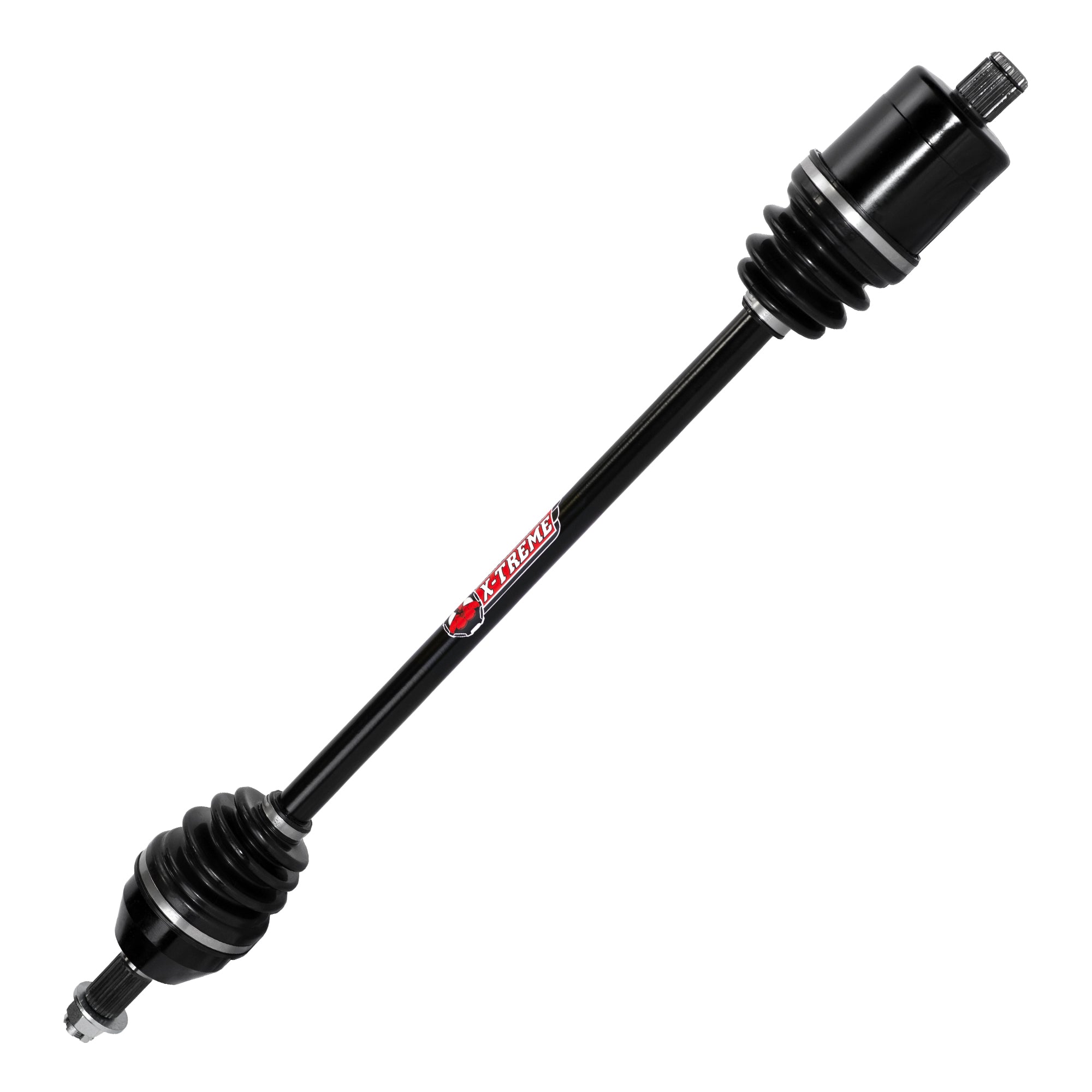
Larger tires, upgraded suspension, increased travel, and hard acceleration can change the conditions under which drivetrain components operate. A UTV that is being pushed beyond its original configuration may require components designed with those demands in mind.
This is where the Polaris RZR Turbo S XHD Axle becomes relevant.
Why an XHD Axle Matters
An XHD axle isn't simply about replacing a worn component. It is about matching the driveline to the way the vehicle is being used.
A Polaris RZR Turbo S that regularly sees dunes, desert trails, aggressive acceleration, or modified suspension can experience conditions very different from a stock machine used for casual riding.
That is why experienced UTV builders look beyond the most obvious upgrades.
A powerful engine is only part of the equation. The power still has to reach the wheels. A long-travel suspension system can increase capability, but the components connected to it still have to accommodate the additional movement.
A high-performance UTV works best when its components are considered as one complete system.
Your Build Is Only as Strong as Its Supporting Parts
It's easy to get excited about the big modifications. New wheels and tires change the appearance immediately. A suspension upgrade can completely transform the vehicle's stance and capability.
But every major modification can influence something else.
Larger tires can change drivetrain loads. More suspension travel changes component movement. Aggressive riding increases the frequency and intensity of the forces moving through the vehicle.
This doesn't mean every modified RZR Turbo S needs the same parts. It means riders should understand how their modifications affect the components connected to them.
The right setup depends on where you ride and how you ride.
From Dunes to Desert Trails
The appeal of the Polaris RZR Turbo S is its ability to take on different environments without losing its performance-focused character.
In the dunes, you might be focused on speed and maintaining momentum through loose sand. On a rocky desert trail, you may be picking your line carefully while the suspension works over uneven terrain.

Both environments demand a capable machine, but they test different aspects of it.
That makes your riding style one of the most important factors when considering upgrades. A rider who spends most of the year on easy trails may have completely different requirements from someone who regularly attacks dunes, rocky terrain, or modified long-travel setups.
When the Pavement Ends
A UTV can look incredibly capable sitting in a garage. But the real test begins when the pavement disappears.
That's when the tires have to find traction, the suspension has to absorb the terrain, the drivetrain has to deliver power, and the axle has to keep doing its job through all of it.
So, can your Polaris RZR Turbo S survive from the dunes to the desert trails?
Horsepower alone won't answer that question.
The real answer comes from how well the entire machine is prepared for the way you ride.
Because when the terrain gets serious, every component matters - including the ones you rarely see.


