

There is a moment on almost every serious trail ride when going forward suddenly becomes the easy part.
Maybe you're descending a steep rocky section, approaching a sharp turn covered in loose dirt, or coming down from a climb with gravity doing everything it can to make the machine move faster. A few minutes earlier, you were thinking about traction and horsepower. Now, there is only one question that matters:
Can your Polaris ATV or UTV slow down when you need it to?
Brakes rarely get the same attention as engines, tires, suspension, or axles. They aren't the parts that make a machine look aggressive sitting in the garage. But once the trail gets steep, muddy, rocky, or unpredictable, the braking system becomes one of the most important systems on the vehicle.

Going Fast Is Only Half the Ride
Off-road riding is full of acceleration. You climb hills, cross open terrain, power through mud, and build momentum whenever the trail gives you the opportunity.
Stopping is a different story.
Unlike a smooth road, an off-road trail doesn't always give you a predictable surface. Loose sand, mud, rocks, water, and steep terrain can all change how your Polaris ATV or UTV responds when you apply the brakes.
That means braking isn't simply about stopping the wheels. It is about managing the vehicle while the terrain is constantly changing.
And that is where the condition and quality of your brake pads start to matter.
The Trail Can Be Harder on Brakes Than You Think
A long downhill section can require repeated braking. Technical terrain may force you to slow down, release the brakes, and apply them again as you work around obstacles. Mud and water can introduce another challenge, while heavy loads or aggressive riding can increase the demands placed on the braking system.
Over time, brake pads naturally wear.
Polaris itself recommends inspecting brake pads and brake fluid at approximately 2,000 miles or 200 hours of riding, with replacement as needed. Polaris also recommends replacing brake pads in pairs on the same axle to help maintain even wear and consistent braking performance.
That maintenance matters because brake performance is not something you want to discover is declining halfway down a mountain.
Why Heavy Duty Brake Pads Become Part of the Conversation
For riders who regularly take their Polaris ATV or UTV into demanding environments, Polaris ATV/UTV Heavy Duty Brake Pads can be considered as part of a broader approach to maintaining and upgrading the braking system.
The goal isn't simply to have a brake pad that fits the caliper.
The goal is to have a braking component suited to the way the machine is actually being used.
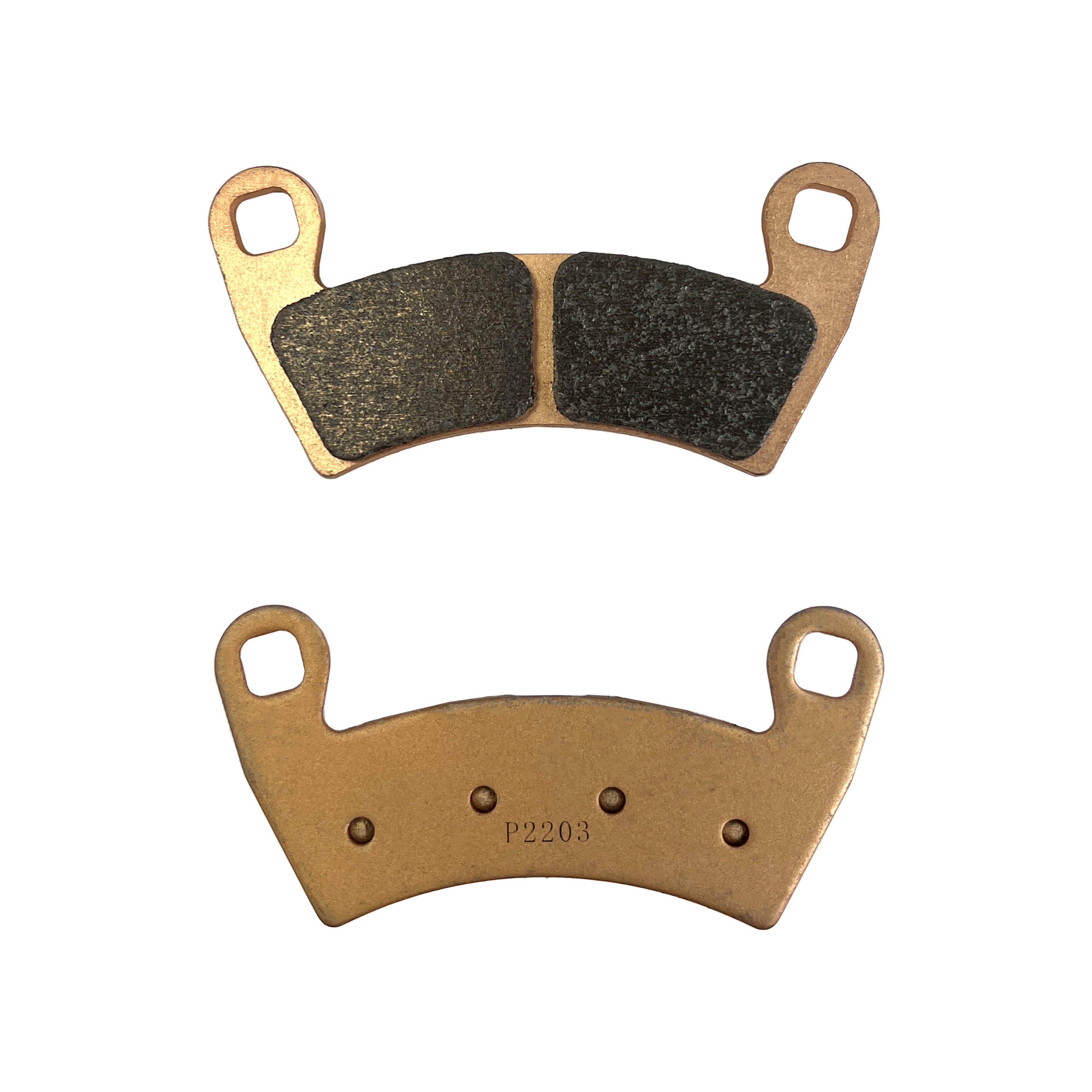
Aggressive trail riding, frequent elevation changes, heavier machines, larger tires, and repeated braking can all make the braking system work harder than it might during casual recreational riding.
This is why experienced riders tend to look beyond the most obvious performance upgrades. A machine can have impressive horsepower and upgraded suspension, but those capabilities also make dependable braking even more important.
More capability means more responsibility for the systems that control it.
Bigger Tires Change More Than Appearance
One of the most common ways riders transform an ATV or UTV is by installing larger or more aggressive tires.
The visual difference is immediate, but the effects don't stop there.
Larger tires can change how the vehicle interacts with the terrain and can alter the demands placed on different components. Add additional accessories, heavier equipment, a lift kit, or more aggressive riding, and the overall vehicle can behave very differently from a stock machine.
That doesn't mean every modification automatically requires an upgraded braking system.
It means riders should consider the entire vehicle rather than treating every upgrade as an isolated change.
Your tires create traction. Your suspension manages movement. Your drivetrain delivers power. And your brakes have to help control all of it when the trail suddenly demands that you slow down.
When Heat and Repeated Braking Enter the Picture
Braking converts the vehicle's motion into heat. On a casual ride, you may never think about it.
On a demanding trail, repeated braking can make heat management increasingly important.
Imagine descending a long technical trail where you repeatedly need to reduce speed. You aren't making one brake application and stopping. You're managing speed over and over while dealing with rocks, turns, elevation changes, and changing traction.
That is why brake components designed for the intended application matter.
Polaris' own brake-pad offerings emphasize characteristics such as heat resistance, stopping performance, durability, and suitability across different riding conditions.
For an aftermarket build, the same principle applies: the braking system should be considered according to the terrain, vehicle setup, and riding style.
The Most Important Upgrade Might Be the One You Don't Notice
A new exhaust makes noise. New wheels change the appearance. A lift kit changes the stance.
Brake pads?
You probably don't notice them at all - until the moment you need them.
That is what makes braking components so important. Their job isn't to make the vehicle look faster. Their job is to give the rider control when momentum needs to become manageable speed.
For serious Polaris ATV and UTV riders, that control becomes increasingly important as the terrain becomes more demanding.
The next time you're preparing your machine for a difficult trail, don't only ask how fast it can climb, how large the tires are, or how much suspension travel it has.
Ask a simpler question:
When the trail gets serious, will your brakes be ready for it?


