

There is a big difference between watching a UTV climb over a rocky obstacle and being the person sitting behind the wheel while it happens. From the outside, a technical trail can look like a simple combination of rocks, dirt, and elevation. From the driver's seat, every obstacle becomes a test of suspension movement, steering control, traction, and the components working underneath the machine.
That is part of what makes Trail Hero such an interesting event for the off-road community. Scheduled for September 28 through October 3, 2026, in Hurricane, Utah, Trail Hero brings together trail riders, manufacturers, vendors, and off-road enthusiasts for a week that includes guided trail activities, rock crawling, a vendor show, and UTV-focused events around the Sand Hollow area.
What Happens When the Trail Gets Technical?
A smooth dirt road doesn't ask much from a UTV compared with a technical rock trail. Once the terrain becomes uneven, the suspension starts working constantly as each wheel encounters a different obstacle.
One wheel may climb a rock while another drops into a hole. The vehicle changes its position as the suspension compresses and extends, while the driver works the steering to keep the machine on the intended line.
All of that movement has to be managed by the suspension and steering system.
This is where components such as ball joints become important.
A ball joint allows controlled movement between suspension components while helping maintain the connection between the suspension and steering assembly. It has to allow movement when the suspension articulates while remaining secure enough to handle the forces generated by the vehicle.
That job may not be as visually impressive as a massive tire or long-travel suspension system, but without properly functioning suspension joints, the rest of the setup cannot perform as intended.
Rock Crawling Changes the Demands
Trail Hero's 2026 schedule includes several demanding off-road activities, including the WeRock Rock Crawl and the SuperATV UTV Challenge: Rampage Rally at Sand Mountain.
These types of events demonstrate why suspension components deserve more attention.
When a UTV approaches a large obstacle, the suspension doesn't simply move up and down. The wheels can move through different positions as the vehicle articulates over uneven terrain. The ball joints have to accommodate that movement while dealing with the forces generated by the vehicle's weight, steering inputs, traction, and terrain.
For a recreational rider, this might happen occasionally on a trail. For someone regularly riding difficult terrain, it can happen throughout an entire ride.
That repeated movement is why suspension components are not simply about fitment. They are about maintaining controlled movement while the vehicle is being asked to do something difficult.
Why an HD Ball Joint Fits Into the Conversation
This is where an HD Ball Joint becomes more than just another replacement component.
When riders build their UTVs for demanding terrain, they often focus on the most visible upgrades first. Larger tires, lift kits, suspension systems, and wheels can dramatically change the appearance and capability of a machine.
But those upgrades can also change what the suspension system has to deal with.
A lifted or aggressively configured UTV may place different demands on its suspension components than a stock machine. Larger tires can also change the forces transmitted through the steering and suspension system.
That doesn't mean a rider should automatically replace every factory component after making an upgrade. It means the supporting components deserve consideration when the vehicle's intended use becomes more demanding.
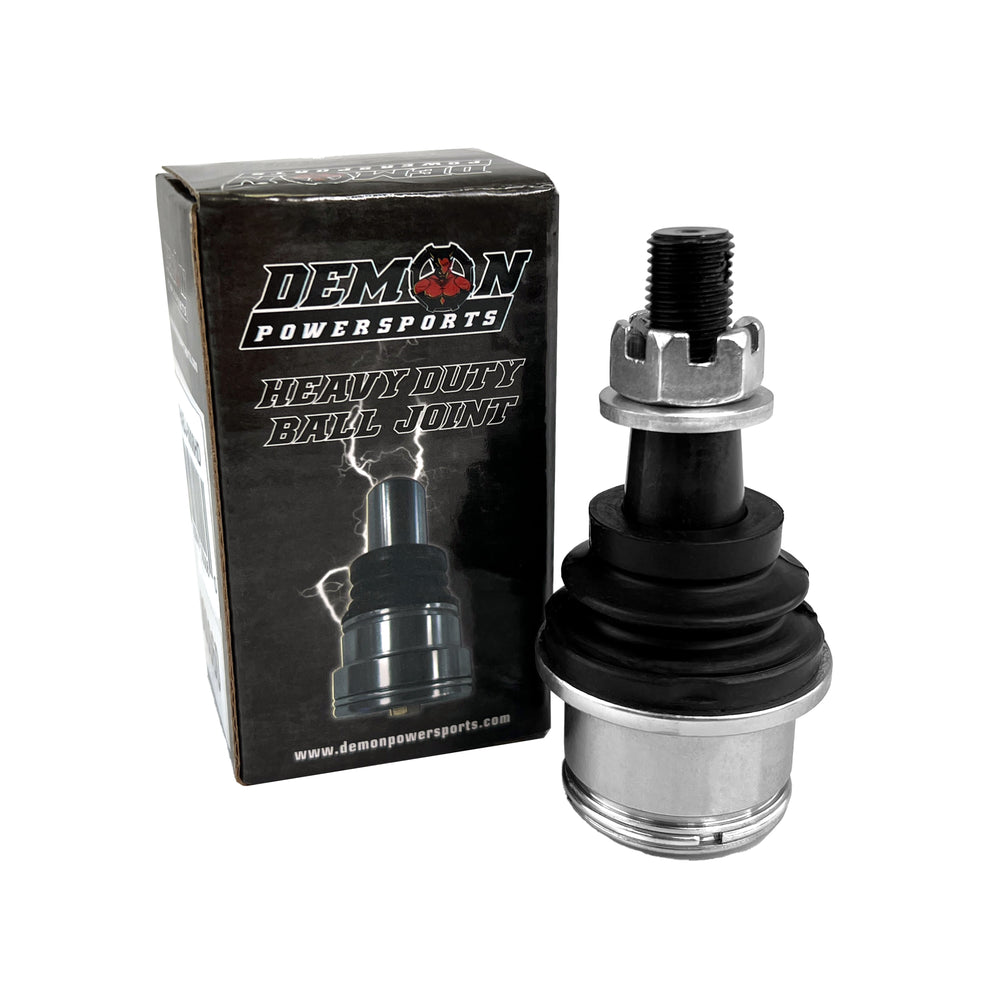
Demon Powersports lists HD Ball Joints among its featured high-performance ATV and UTV products, alongside HD axles, Race Spec axles, EPS kits, and other components designed around different areas of the vehicle.
The broader idea is simple: when you increase the capability of one part of a machine, you should understand what that change means for the components connected to it.
The Trail Doesn't Care How Your UTV Looks
One of the easiest traps in off-road building is judging a machine by its appearance.
A UTV can have enormous tires, an impressive suspension setup, and enough accessories to fill an entire showroom. But once it reaches a technical trail, appearance stops mattering.
The terrain doesn't care how expensive the wheels are. It doesn't care how impressive the suspension looks. It only exposes whether the machine's systems can work together.
That is why events like Trail Hero are useful beyond the entertainment value. They give enthusiasts an opportunity to see what happens when vehicles are taken into environments that genuinely challenge them.
A suspension system has to articulate. Steering components have to maintain control. Ball Joint have to allow the movement they were designed for. Axles have to continue transferring power. Tires have to find traction.
Every component becomes part of the same conversation.
Building for the Trail Means Thinking Beyond the Big Parts
The off-road industry has always been driven by riders who want to go farther, climb higher, and tackle terrain that once seemed impossible. Events such as Trail Hero show that progression in real time.
But the lesson isn't simply to build the biggest or most aggressive machine possible.
It is to understand how the entire vehicle works together.
A long-travel suspension system needs components capable of working through its range of movement. Larger tires can change the demands placed on steering and suspension components. A lift can change geometry. And aggressive terrain can expose weaknesses that may never appear during casual riding.
That is why something as seemingly simple as an HD Ball Joint deserves a place in the conversation.
The most capable UTV isn't necessarily the one with the most upgrades. It is the one where the upgrades, supporting components, and intended riding conditions all make sense together.

What Trail Hero Really Shows Us
Trail Hero is more than a gathering of off-road vehicles. With trail rides, rock-crawling events, UTV challenges, and a large vendor show, it represents the culture of people who continually push their machines and themselves further into challenging terrain.
And that is what makes the event valuable for anyone interested in UTVs.
The next time you watch a UTV climb over a rock, pay attention to everything happening underneath it. While the engine provides the power and the tires search for traction, the suspension and steering components are constantly moving, adjusting, and absorbing the demands of the terrain.
Some of the most important parts of the machine may never be the ones that attract attention at the trailhead.
They are the parts that quietly keep everything moving when the trail fights back.


