

The sun is sinking rapidly behind the mountain ridge, casting long, menacing shadows over a trail that suddenly feels a lot less friendly than it did two hours ago. Your rear differential is high-centered on an unrelenting rock, your tires are spinning uselessly in liquid clay, and that quiet, heartbreaking click-click-click of an overheating starter motor is the only sound breaking the desert silence. You’re miles from cell service. You’re cold. And your stomach is dropping faster than the ambient temperature.
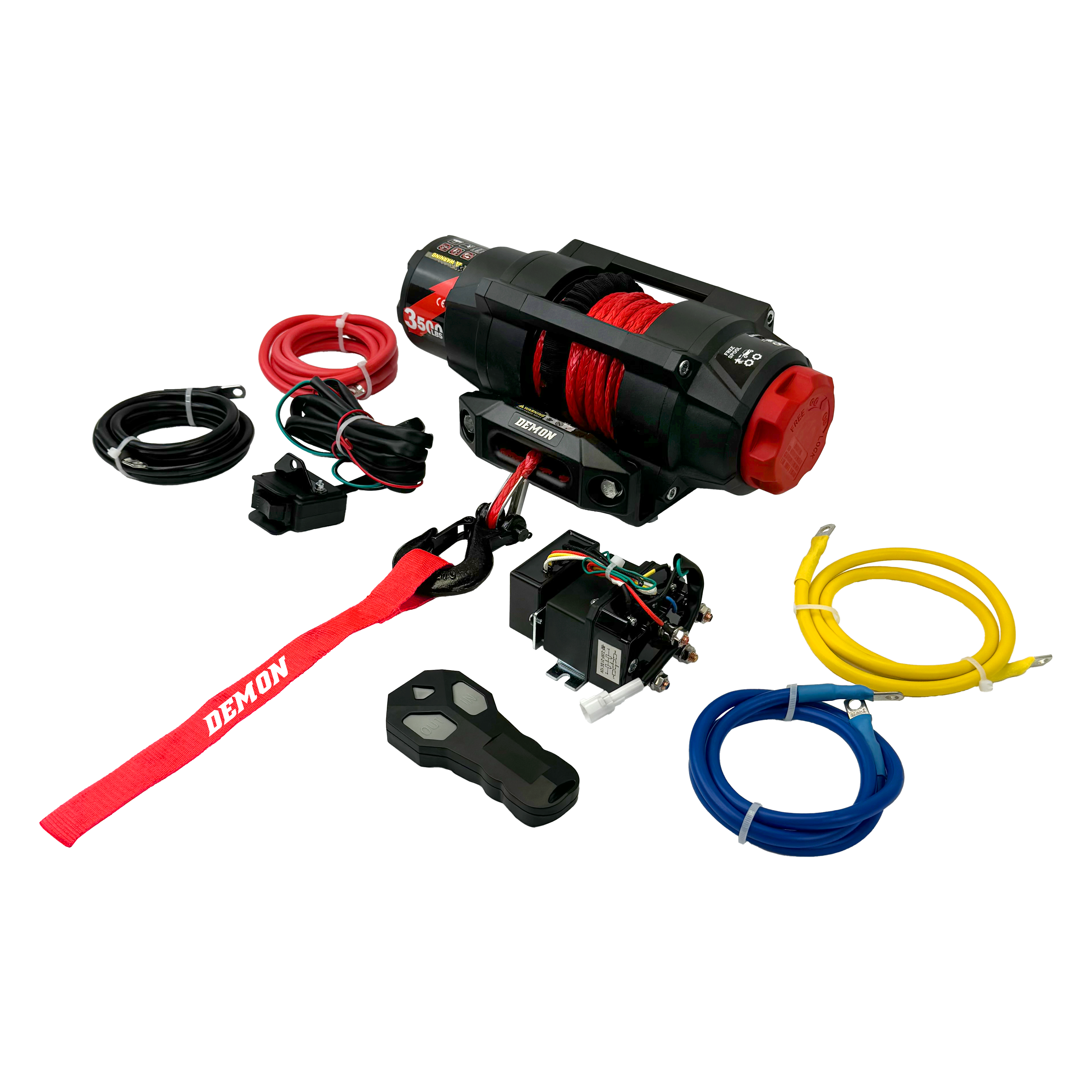
In moments like these, off-roading stops being an adrenaline-fueled hobby and turns into a high-stakes survival puzzle. Sitting right on the front bumper of many rigs is the supposed ultimate savior: a Heavy-Duty Winch.
But here is the million-dollar question that sparks heated debates around campfires everywhere: Does every single 4x4 and UTV actually need a heavy-duty winch for trail recovery? Or have we all just been sold on the flex of heavy steel bumpers and high-tensile synthetic lines? Let’s strip away the trail bravado and look at the cold, hard reality.
When an HD Winch is Your Only Lifeline
Let’s start with the non-negotiables. There are specific off-road scenarios where skipping a heavy-duty winch isn't just an inconvenience—it’s borderline reckless.
1. The Lone Wolf Rider
If your idea of a great weekend is slipping into the backcountry solo without a convoy of buddies to pull you out, an HD winch is your ultimate insurance policy. When you're alone, there is no second vehicle to strap onto. There is no one to yank a kinetic rope. It’s just you, your vehicle, and whatever sturdy anchor point you can find.
2. The Mud and Clay Monster
If you frequent deep, soupy mud bogs, you aren't just fighting gravity—you’re fighting suction. Deep mud creates a vacuum lock around your axles and skid plates that can double or triple the force required to move your rig. A simple snatch strap pulled by a buddy can snap under that stress or yank off a tow point. The smooth, steady, multi-ton pulling force of an HD winch gracefully breaks that mud grip without ripping your suspension apart.
3. Heavily Loaded Overland Builds
Once you bolt on steel armor, roof racks, rooftop tents, extra fuel cans, and camping gear, your lightweight 4x4 or UTV suddenly weighs as much as a small building. Light-duty utility winches will simply stall out, blow fuses, or fry their internal gearing under that kind of static load.
When You Can Skip the Heavy Steel
Now for the plot twist: not every off-roader needs to drop $800+ and bolt 70 extra pounds onto their front suspension.
If your off-road life consists of groomed fire roads, desert sand dunes, or light forest trails, an HD winch is often complete overkill. On sand or loose dirt, momentum, proper tire deflation, and a set of quality traction boards will get you unstuck 95% of the time. Besides, winches need solid anchor points—and good luck finding a sturdy oak tree in the middle of open sand dunes!
Similarly, if you always ride in a well-equipped group, trail recovery becomes a team sport. A group of three or four rigs equipped with kinetic recovery ropes, soft shackles, and a bit of recovery knowledge can easily pull a stuck UTV or light truck out of almost any basic hang-up in seconds.
HD Winch vs. Standard Utility Winch: The Real Differences
If you do decide you need a winch, don't make the mistake of buying a light-duty utility winch meant for pulling a lawn tractor onto a trailer. Understanding the mechanics keeps you from getting stranded with a burned-out motor.
-
Pulling Capacity: Standard utility winches usually top out between 2,000 and 4,500 pounds. Heavy-duty winches start around 8,000 pounds and scale all the way up to 16,000+ pounds.
-
Motor Engineering: Light winches often rely on Permanent Magnet motors, which heat up rapidly and lose power under sustained pulls. HD winches use high-output Series-Wound motors built to endure long, torturous recoveries without melting down.
-
Water and Dust Protection: Trail recovery rarely happens in dry, sunny weather. HD winches feature IP67 or IP68 waterproof ratings, meaning their electronics stay sealed even when completely submerged in muddy river crossings.
-
Duty Cycle: Heavy-duty variants feature heavy-gauge wiring and upgraded heat sinks, allowing them to pull continuously for longer periods without requiring cool-down breaks.
The Golden Sizing Formula
To figure out if your rig requires heavy-duty pulling power, use this industry-standard calculation:
If your fully loaded 4x4 hits 5,500 lbs on the scales, your minimum requirement is an 8,250 lb winch. That puts you firmly in heavy-duty territory!
Smart Winch Alternatives for the Minimalist
If you decide an HD winch isn't right for your setup or budget, you cannot leave the pavement empty-handed. Every capable rig needs a solid recovery kit:
-
Kinetic Recovery Ropes: Unlike stiff tow straps, kinetic ropes stretch up to 30%, using stored energy to smoothly "snatch" a vehicle free without jarring the occupants.
-
Traction Boards: The ultimate zero-effort fix. Wedge them under your spinning tires, bump the throttle, and drive right out of deep mud or snow.
-
Manual Hand Winches & Hi-Lift Jacks: Muscle-powered and practically unbreakable. They require elbow grease, but they never run out of battery power or burn out a solenoid.
The Final Verdict
So, does every 4x4 and UTV need a heavy-duty winch? No. If you stay on mild trails, travel in convoy groups, or ride light SxSs in the sand, you can save your money and payload weight for other gear.
However, if you crave remote wilderness solo trips, tackle deep mud and steep rocks, or drive a heavy overland rig, an HD winch isn't just an accessory—it’s your golden ticket home. It turns a potential trail nightmare into a quick 10-minute pause. Equip your rig for the reality of your terrain, and hit the trails with total confidence!


