





You built your rig to push boundaries. You installed a premium long-travel suspension kit, threw on aggressive oversized mud tires, and dialed in the ground clearance. But if you are still running a stock or standard aftermarket driveline, you are riding on a ticking time bomb.
When you increase your vehicle’s track width and suspension articulation, your factory axles are forced to stretch past their intended engineering limits. The increased operating angles place immense stress on your CV joints (constant velocity joints). Without upgrading to an Xtreme Heavy Duty Long Travel Axle Race Spec.
Here is everything you need to know about what a race-spec long-travel axle does, and how to spot the signs that your current setup is on the verge of snapping.
An Xtreme Heavy Duty Long Travel Axle Race Spec is a highly engineered, heavy-duty driveline component purpose-built for heavily modified UTVs, ATVs, and off-road racing rigs. Unlike standard replacement axles, these are explicitly extended in length to perfectly match wider, high-clearance long-travel kits (ranging from +2 to +5 inches or more).
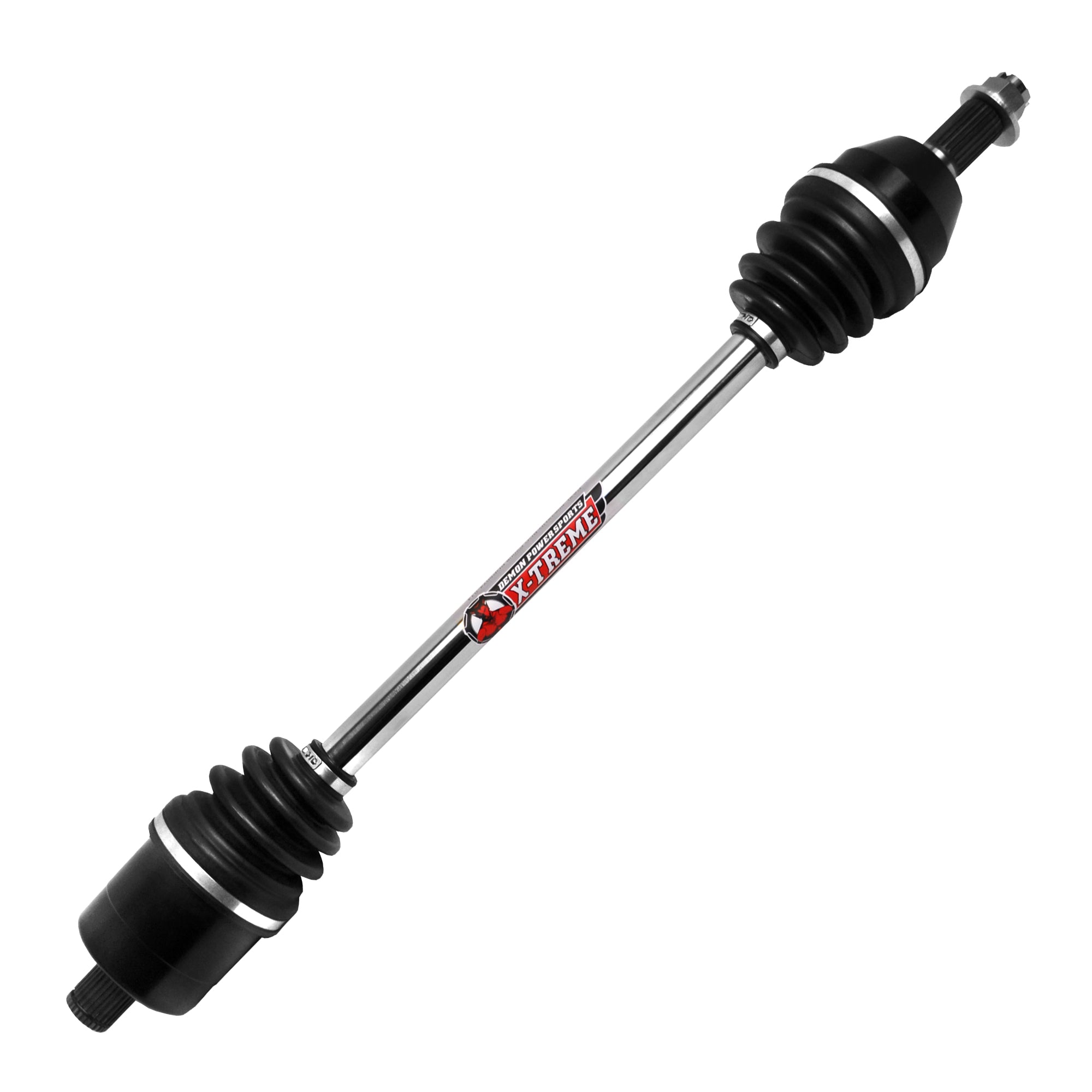
Handles Extreme Articulation: It allows your wheels to drop deeper into ruts and flex higher over rocks without binding the internal bearings.
Manages Higher Horsepower: Race-spec axles are built to handle the massive torque spikes generated by high-output engines and intense traction conditions.
Survives High Operating Angles: Standard CV joints quickly overheat and seize when forced to rotate at steep angles. A race-spec axle utilizes advanced internal geometry to remain smooth even at maximum suspension drop.
When you add larger tires and high-articulation suspension, you drastically increase the leverage and load placed on the driveline. A race-spec axle uses high-tensile materials like 4340 Chromoly Steel or 300M aerospace alloys, paired with dual heat-treatment processes. It is designed to be the strongest link in your drivetrain, ensuring you can hammer the throttle through deep mud, desert whoops, and rocky trails without snapping an axle shaft miles away from civilization.
Before a CV axle breaks completely and leaves you stranded with a total loss of power, it will give you several warning signs. If your modified rig is experiencing any of these four symptoms, your axle is screaming for an upgrade.
The classic indicator of a failing outer CV joint is a rhythmic clicking, snapping, or popping noise when you turn the wheels. This happens because the internal ball bearings and races have worn down or binding occurs due to extreme operating angles. If you hear this noise at low speeds while navigating tight trails or obstacles, your axle is heavily compromised.
Unlike a poorly balanced tire that vibrates constantly at highway speeds, a failing inner CV joint causes a distinct shudder or wobble specifically under load. If you step on the gas pedal and feel a pulsing sensation radiating through the floorboards or steering wheel, the joint has developed excessive play. This structural imbalance means the axle can no longer handle the engine's torque smoothly.

Your CV joints are packed with high-temperature grease and sealed inside flexible rubber or neoprene boots. Because long-travel setups force the suspension to maximize its extension, factory or cheap aftermarket boots frequently stretch, tear, or pinch.
The Ticking Time Bomb: Once a CV boot rips, centrifugal force flings the protective grease all over your inside wheel barrels and A-arms. Dirt, sand, and water immediately enter the joint, destroying the bearings in a matter of days.
If you lift your vehicle off the ground to let the suspension sag completely (full droop) and try to spin the tires by hand, do they catch, notch, or refuse to rotate smoothly? That is axle binding. It means your current axle shaft is too short for your long-travel suspension kit, pulling the joint right to the edge of its physical housing. Forcing the vehicle to drive under power in this state will snap the axle instantly on the first hard landing or rock climb.
The best axle upgrade isn’t just about buying something thick, it's about matching the components to the physical architecture of your machine.
Leave a comment