





Most riders notice the obvious upgrades first. Bigger tires grab attention. Lift kits change the way the machine looks. New suspension components promise a smoother ride. But after those upgrades are installed, something often feels different. The machine may have gained capability, yet it doesn't always feel as balanced as expected.
That feeling usually has nothing to do with horsepower, it has everything to do with vehicle geometry. Every modification changes the way an ATV or UTV interacts with the ground. The distance between the tires, the way weight transfers through corners, and how the suspension reacts to uneven terrain all play a role in how confident the machine feels.
A machine does not suddenly become unstable overnight; it happens gradually as upgrades accumulate. You install larger tires, add a bracket lift kit, explore rougher trails, or spend more weekends riding through rocky terrain. Little by little, the machine begins reacting differently in corners and off-camber sections.

One ride might leave you making small steering corrections that never used to be necessary. Another ride may feel less predictable on side hills or tight switchbacks. Nothing seems broken, but the machine's balance has shifted. That is often the moment riders begin paying attention to their wheel stance. A wider, properly balanced stance can help restore the confidence that gradually disappeared as the rest of the machine evolved.
Most conversations about wheel spacers begin with tire clearance. That is understandable because fender rubbing is easy to notice. When larger ATV or UTV tires begin touching suspension components or body panels, riders immediately start looking for more room.
As larger tires move through the suspension travel, the entire geometry of the machine changes. Steering feel, body roll, and cornering confidence all become part of the equation. This is why experienced riders consider ATV wheel spacers or UTV wheel spacers after installing larger tires. The goal is not simply to move the wheels outward, but to create a setup where tires, suspension, and steering continue working together naturally.
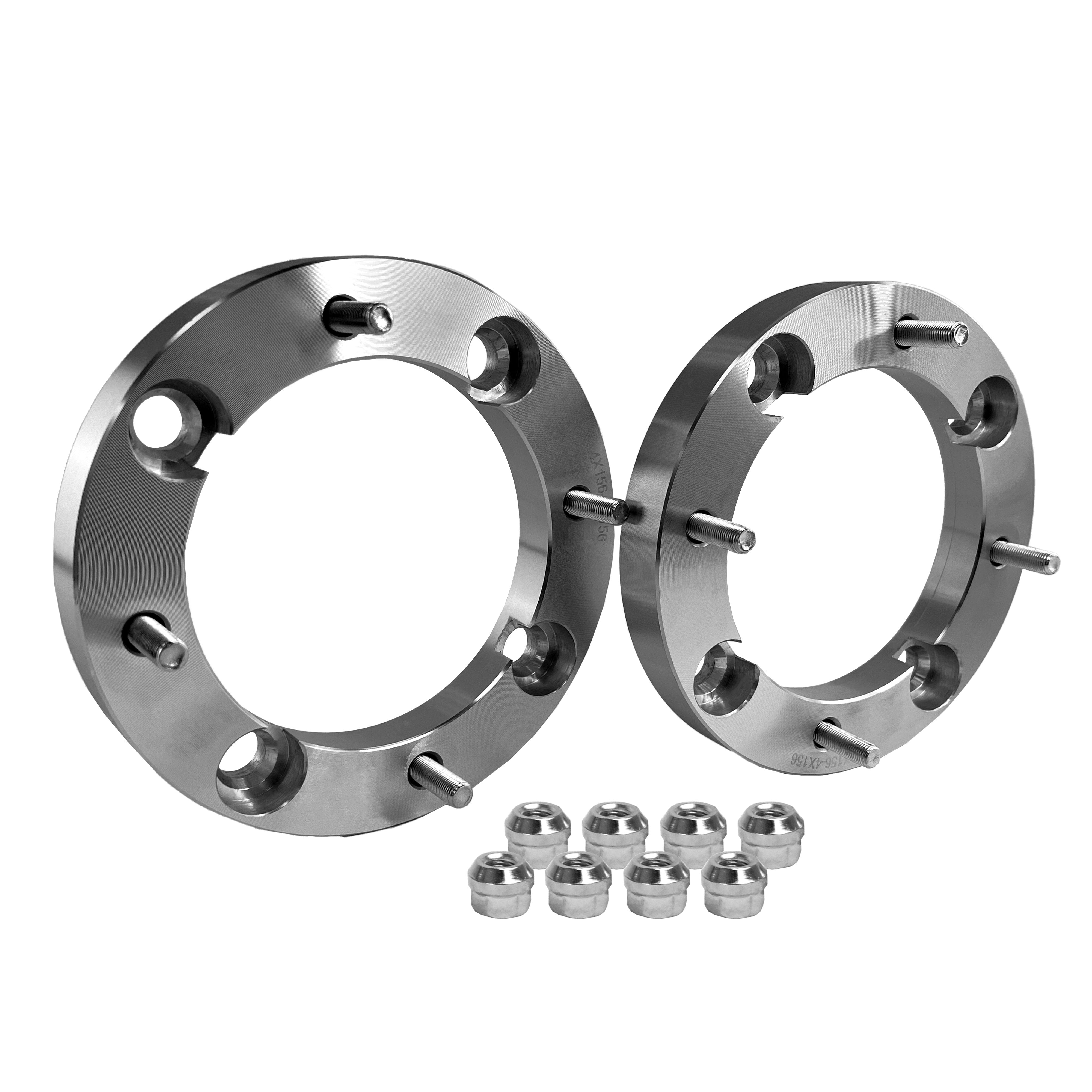
Many riders think cornering is all about driver input, but the machine begins preparing for every corner long before the steering wheel moves. Weight shifts, suspension compresses, and tires search for traction. The wider and more balanced the foundation, the easier it becomes for the suspension to manage those changes.
Confidence in a corner starts underneath the machine:
Weight Distribution: Extending track width mitigates lateral body roll on off-camber terrain.
Suspension Harmony: Complements upgraded long-travel arms and heavy-duty shocks.
Model Integration: Essential for tuned platforms like the Polaris RZR, Can-Am Maverick, Honda Pioneer, Yamaha Wolverine, Kawasaki Teryx, or CFMOTO UForce.
The objective is never to chase a wider stance simply for appearance, but to help the machine feel composed when the terrain becomes unpredictable.
One of the biggest mistakes riders make is treating upgrades as separate projects. A lift kit solves one problem, bigger tires solve another, heavy duty axles strengthen the driveline, and electric power steering reduces steering effort. Each upgrade has a purpose, but none of them work in isolation.
The strongest builds are where every part supports the next:
Evaluate Current Balance: Ask if your machine feels as planted as it did stock.
Determine Placement: Choose between front wheel spacers to clear steering tie rods, or rear wheel spacers to match front track width.
Harmonize Components: Ensure tire size, suspension articulation, and hub mounting work without binding.
The most satisfying upgrades are rarely the ones riders constantly think about, they are the ones that quietly improve the experience until the machine simply feels right. A properly balanced vehicle allows riders to focus less on correcting steering and more on enjoying the trail.
Conversations about wheel spacers are rarely just about adding width. They are conversations about stability, confidence, and creating a machine that feels composed whether it is climbing rocky terrain, crossing uneven trails, or carving through long corners.
Leave a comment