





Your Polaris RZR is built for off-road adventures, but rough trails can put plenty of stress on its steering system. Whether you’re navigating rocky paths, cutting through muddy ruts, or cruising over uneven terrain, your tie rod ends help translate steering input into wheel movement.
When these small but important components become worn or damaged, your RZR may not respond as precisely as it should. Recognizing the warning signs early can help you identify steering problems before your next ride.
Does your Polaris RZR steering wheel move before the front wheels respond? Excessive steering play can be a sign that something in the steering system has developed looseness.
Tie rod ends are one component to inspect, especially if the steering feels less precise than usual. However, play can also come from the steering rack, steering shaft, ball joints, or other connections.
Polaris recommends checking steering free play and having the system inspected if you notice excessive movement, unusual noises, or rough steering. The specified free play varies by model, so refer to your RZR’s owner’s manual rather than assuming one measurement applies to every machine.
A clunk from the front end when driving over bumps or changing direction deserves attention. If a tie rod end has developed excessive play, it may contribute to knocking sounds as the steering components move.
But don’t automatically blame the tie rod ends. Ball joints, wheel bearings, loose hardware, and other suspension or steering components can produce similar noises.
If your RZR starts making unfamiliar sounds, inspect the steering linkage and front suspension to identify the actual source before replacing parts.
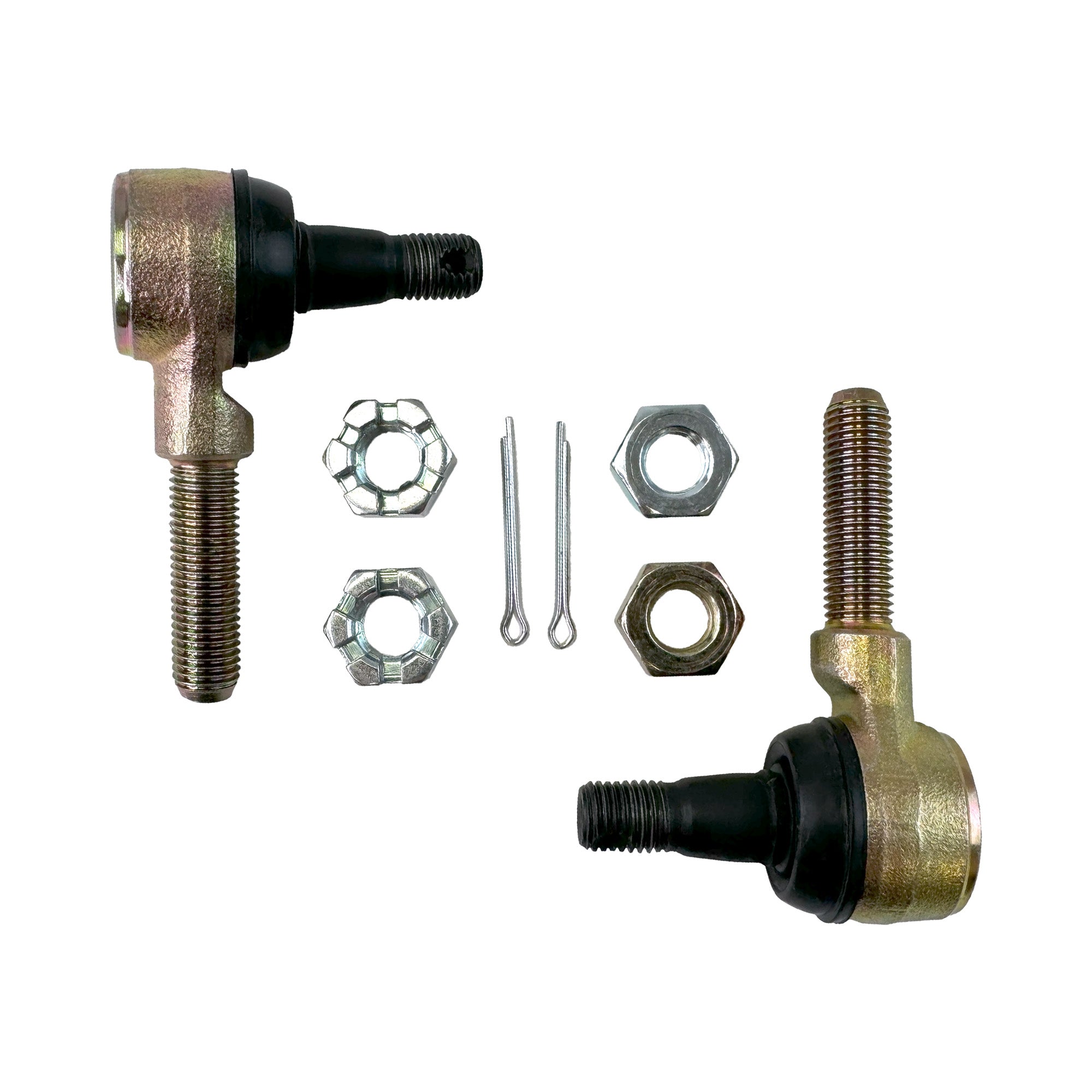
When your Polaris RZR tracks differently than it used to, it may be tempting to blame the trail conditions. However, steering components and wheel alignment can also affect how the machine responds.
A worn or damaged tie rod end may introduce unwanted movement into the steering linkage. You might notice that the RZR feels less predictable when changing direction or moving across uneven terrain.
Keep in mind that wandering can also result from tire pressure differences, alignment issues, worn ball joints, or other mechanical problems. A complete inspection is important before deciding which component needs replacement.
Take a close look at your front tires. If one tire is wearing differently across its tread, it may indicate an alignment or steering issue.
Tie rod ends help maintain the connection between the steering system and the wheels. When a joint becomes loose or damaged, it can affect steering geometry and contribute to irregular tire wear.
Still, uneven tire wear doesn’t prove that your tie rod ends have failed. Incorrect tire pressure, suspension wear, and alignment problems can create similar patterns.
If you notice unusual wear, inspect the steering and suspension components and check the alignment before your next ride.
Sometimes, the clearest warning sign is something you can see or feel during an inspection.
Look for damaged boots, corrosion, loose hardware, or abnormal movement around the tie rod ends. Polaris service guidance recommends checking steering components for looseness, wear, and damage, and replacing worn or damaged parts.
To check for play, follow the inspection procedure in your specific RZR service manual. If you’re unsure how to inspect the joint safely, have a qualified technician examine it.
Important: If you find significant looseness, a damaged joint, or compromised steering, don’t continue riding until the problem has been properly assessed and repaired.
Leave a comment