





There is a reason Can-Am riders love having plenty of power under their right foot. A strong engine can turn a difficult climb into an exciting challenge, carry momentum through rough terrain, and make open trails feel like an invitation to push a little harder.
But every time you add more speed, there is another side of the equation that deserves just as much attention.
How are you going to slow it down?
Braking is rarely the first thing riders talk about when planning a Can-Am build. Bigger tires, suspension upgrades, horsepower, and accessories usually get the spotlight. Yet when the trail suddenly tightens into a sharp corner or a steep downhill section appears ahead, the braking system becomes one of the most important parts of the machine.
Off-road riding doesn't happen on a predictable road.
A trail can go from fast and open to rocky and technical within minutes. A downhill section can appear after a long climb, or a corner can arrive sooner than expected. Mud can reduce traction, while rocks and uneven surfaces can make braking feel completely different from what you experience on pavement.
That means your Can-Am's brakes have to work with the terrain, not against it.

And unlike acceleration, braking isn't something you can simply ignore when everything is going well. Eventually, every serious ride produces a moment when you need to lose speed quickly and maintain control at the same time.
It is easy to think of brake pads as components whose only job is to stop the wheels.
In reality, controlled braking is part of how you manage the entire vehicle.
When approaching a technical section, riders may brake repeatedly to control speed. On long descents, the brakes can be used again and again. During aggressive trail riding, frequent changes in speed can place additional demands on the braking system.
Heat also becomes part of the equation because braking converts motion into heat. The harder and more frequently you brake, the more important it becomes to maintain a braking system that is appropriate for the way the vehicle is being ridden.
That is why brake pads deserve more attention than they usually receive.
A stock Can-Am and a heavily modified Can-Am don't necessarily experience the same demands.
Larger tires can change how the vehicle interacts with the ground. Additional accessories can add weight. Suspension changes can alter how the machine behaves over uneven terrain. Aggressive riding can increase the frequency and intensity of braking.
None of these modifications automatically mean that factory brake components are inadequate.
But they do give riders a reason to look at the entire vehicle rather than treating each upgrade separately.
If you've increased what your Can-Am can do, it makes sense to consider whether the braking system is keeping pace with the rest of the build.
This is where Can-Am Heavy Duty Brake Pads become relevant for riders who regularly put their machines through demanding conditions.
Heavy-duty brake pads are not about making a Can-Am faster. They are about supporting the part of the ride that happens after the throttle is released.
For riders who spend time on steep trails, technical terrain, mud, or long off-road routes, brake-pad selection can become an important part of maintaining consistent braking performance.
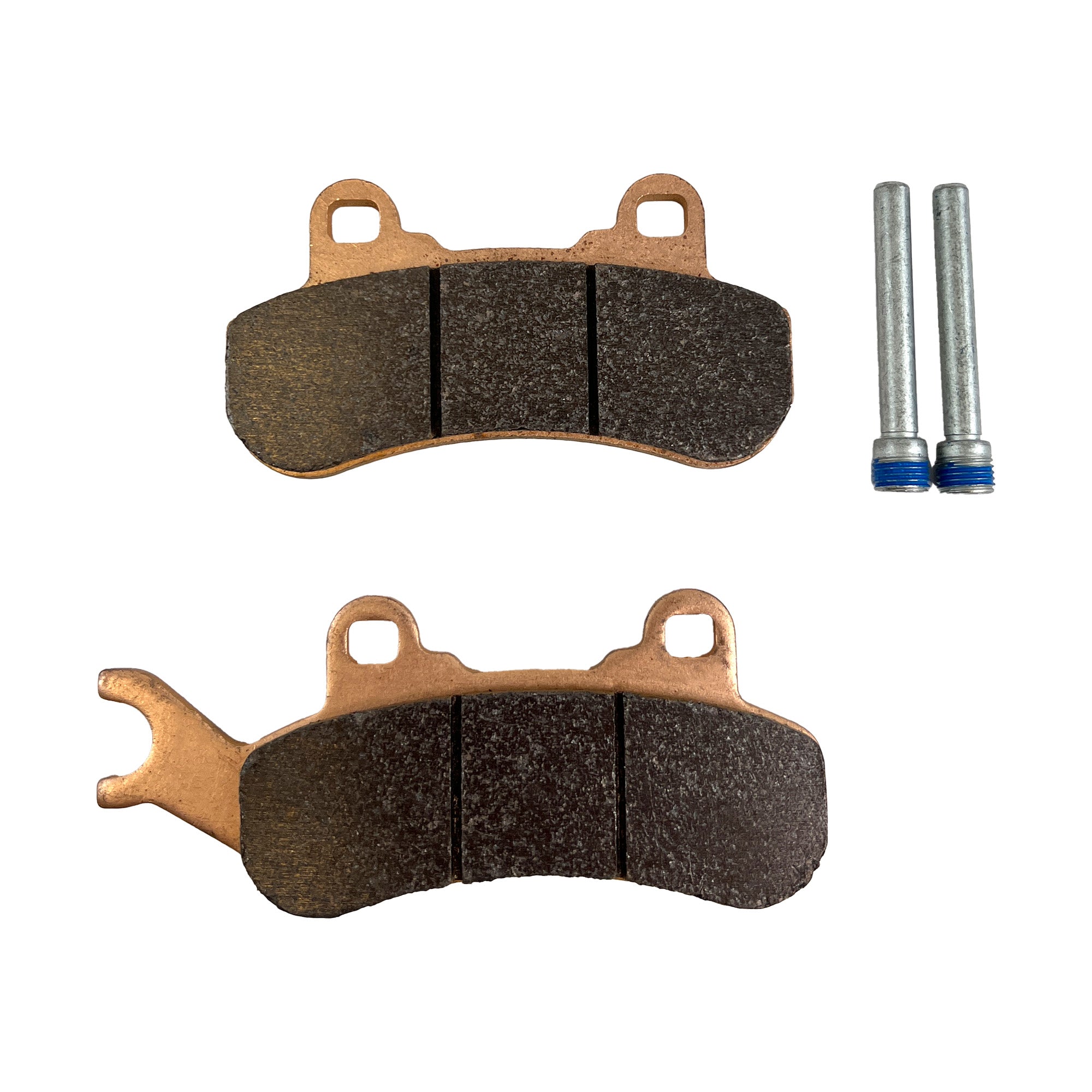
The key is choosing components based on actual use. A rider who spends most weekends on easy recreational trails has different requirements from someone who regularly pushes a Can-Am through difficult terrain.
One of the biggest challenges with braking is that much of the work happens invisibly.
You don't see heat building inside the braking system. You simply pull the brake lever or press the pedal and expect the vehicle to respond.
During a demanding ride, repeated braking can make heat management increasingly important. This is particularly relevant on long descents where riders may need to control speed for extended periods rather than making one quick stop.
That is why brake inspection should be part of normal maintenance.
Checking pad thickness, looking for uneven wear, and paying attention to changes in braking feel can help identify problems before they become trail problems.
Nobody starts a Can-Am ride thinking about the brakes every five minutes.
And you shouldn't have to.
The ideal braking system becomes something you trust without constantly thinking about it. You know that when the trail turns sharply downhill, a rock appears around the corner, or another rider suddenly slows ahead of you, your machine is ready to respond.
That confidence doesn't come from horsepower alone.
It comes from knowing the important systems on your Can-Am are prepared for the conditions you're actually going to encounter.
The answer depends on how you ride.
If your Can-Am is mostly cruising easy trails, your braking demands may be relatively modest. But if you're riding aggressively, carrying additional weight, running larger tires, tackling steep terrain, or spending long days in technical conditions, your brakes deserve the same attention you give the rest of the machine.
Because having the power to go faster is only half of the equation.
"A capable Can-Am isn't defined by how quickly it can reach the next obstacle. It's defined by how confidently you can control it when that obstacle arrives."
Leave a comment