

A winch can become one of the most useful upgrades on an ATV or UTV, especially when your riding takes you through deep mud, rocky trails, steep climbs, or remote areas. But choosing a winch involves more than looking at its pulling capacity. The mounting pattern, electrical setup, rope specifications, and available controls all matter when selecting recovery equipment for your machine.
The Universal Application Heavy Duty Winch is designed for a range of ATV and UTV applications, with different capacity options and features intended for demanding off-road use. Before choosing your setup, here are the details worth understanding.
1. Choose the Right Winch Capacity
Winch capacity should match the weight of your vehicle and the type of recovery situations you expect to encounter. A machine carrying passengers, cargo, tools, or additional accessories may require a different setup than a lightly equipped ATV.
The Demon Heavy Duty Winch is available in:
-
3,500-lb configuration
-
4,500-lb configuration
When comparing these options, consider your machine's weight, its typical load, and the manufacturer's recommendations. Do not select a winch based only on engine size or assume that the higher capacity is automatically the right choice for every vehicle.
Choosing an appropriate capacity helps ensure your recovery equipment is matched to the application.
2. Check the Mounting Pattern Before Ordering
One of the most important steps when choosing a universal ATV or UTV winch is confirming that it can be mounted correctly.
Winches commonly use different mounting patterns depending on their spool configuration. The Demon product listing identifies two mounting patterns:
-
Narrow spool: 3.0" x 4.87"
-
Wide spool: 3.0" x 6.59"
Check the dimensions of your machine's winch plate and compare them with the selected winch. You should also confirm that the mounting plate, bumper, and fairlead provide the correct positioning.
Universal application does not mean every winch will bolt directly onto every ATV or UTV without checking the mounting requirements. A compatible mounting solution is still essential.
3. Understand the Features That Matter
A winch needs more than pulling power. Its motor, gearing, rope, and electrical components all contribute to how the recovery system operates.
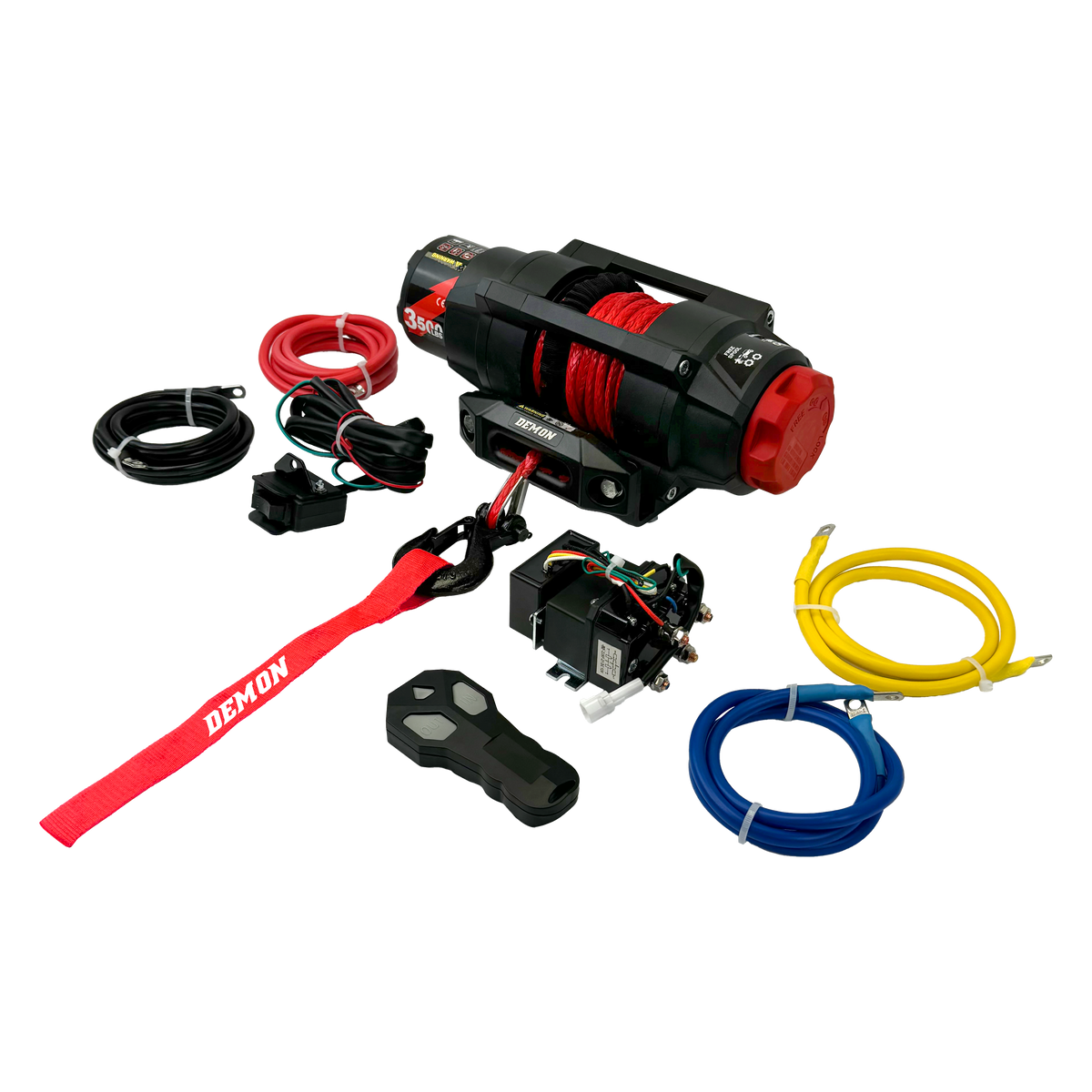
The Universal Application Demon Heavy Duty Winch includes several features designed for off-road applications.
12V Permanent Magnet Motor
The winch uses a 12V DC permanent magnet motor with a 1.3 HP output. It provides the motor power for controlled winch operation during recovery.
Three-Stage Planetary Gear System
An all-metal, three-stage planetary gear system with a 172:1 gear ratio is designed to deliver the torque required for demanding recovery tasks.
Synthetic Rope
The winch comes with a 4.8 mm diameter synthetic rope measuring 15.2 meters in length. Its lightweight construction makes it practical to handle during setup and recovery.
Waterproof Electrical Components
The solenoid and electrical assemblies carry an IP68 rating and are rated for submersion at 1.5 meters for up to 30 minutes. This is useful protection for equipment exposed to wet off-road conditions, although it does not mean the entire winch or vehicle is suitable for unlimited underwater use.
Wireless Remote and Handlebar Control
A wireless remote with a 50-foot range provides convenient control, while the included handlebar-mounted mini rocker switch offers another operating option.
Together, these features make the winch a practical recovery option for riders who need dependable equipment for off-road adventures and work-related applications.
4. Prepare Your ATV or UTV for Installation
Even a suitable winch needs to be installed correctly. Before beginning, review the installation instructions for the selected configuration and make sure you have the appropriate mounting hardware and compatible winch plate.
Pay attention to these areas:
-
Mounting security: Confirm that the winch is firmly secured to the correct mounting plate.
-
Electrical connections: Route and connect the power cables according to the installation manual.
-
Fairlead alignment: Make sure the rope feeds through the fairlead without unnecessary rubbing or sharp bends.
-
Remote operation: Test the controls and confirm the winch operates in the correct direction before heading out.
-
Rope condition: Inspect the synthetic rope for cuts, abrasion, or other visible damage.
The product page provides installation manuals for both the PAWI-3500HD and PAWI-4500HD configurations. Use the manual that matches your selected winch.
5. Use Your Winch Responsibly During Recovery
Having a winch installed is only part of being prepared. Safe recovery also depends on using the correct equipment and following proper procedures.
Before winching, choose a suitable, rated anchor point and use an appropriate tree-saver strap when anchoring to a tree. Keep bystanders clear of the recovery area, wear suitable gloves when handling the rope, and avoid standing in line with a loaded winch rope.
Apply steady tension rather than using sudden jerks. Never exceed the winch's rated capacity or use it for lifting people or loads. Always follow the manufacturer's recovery and operating instructions.
For a broader look at how recovery equipment fits into an off-road setup, read our guide: Why Every ATV and UTV Rider Should Consider a Heavy Duty Winch.


