

Mud has a way of making confident UTV riders humble.
One minute, you're cruising through the trail, looking for the next hole to conquer. The next minute, you're staring at a wall of brown water wondering whether you should hit it harder, slower, or not at all. Then the throttle opens, the tires start digging, and suddenly the entire UTV disappears into a cloud of mud.
That is exactly the kind of chaos that makes events like Mudstock so exciting.
Scheduled for September 4–7, 2026, at Muddy Bottoms ATV & Recreation Park in Sarepta, Louisiana, Mudstock is one of the long-running events in the ATV/UTV off-road scene. The event combines serious mud riding with the atmosphere of a large off-road gathering, making it a perfect example of why riders love pushing their machines through conditions that would make an ordinary vehicle turn around.
But mud doesn't only test how brave the driver is. It tests what is happening underneath the UTV.
Mud Doesn't Stop at the Tires
When a UTV charges through a mud hole, the tires aren't the only things getting covered.
Mud and water can reach suspension components, drivetrain components, joints, and areas that are supposed to remain protected. The deeper the mud, the harder it becomes to keep contamination away from the parts that depend on clean grease and proper sealing.
This is where things get interesting.
A UTV can come out of a mud hole looking perfectly fine. The engine is running, the tires are spinning, and the driver is already looking for the next hole.
But underneath, contamination may have started a completely different process.

Your CV Joints Don't Like Mud Nearly as Much as You Do
CV joints rely on grease for lubrication and protection. The CV boot helps keep that grease where it belongs while creating a barrier against dirt, water, and other contaminants.
That makes the boot much more important than its simple appearance suggests.
A damaged or compromised boot can allow grease to escape while giving mud and water an opportunity to enter. Once contamination reaches the joint, the problem can become much more expensive than a damaged piece of rubber.
This is one of those situations where the smallest component can protect a much larger investment.
You may love the mud. Your CV joint definitely doesn't.
The Problem With "It Still Works"
One of the biggest traps with off-road maintenance is assuming everything is fine because the vehicle is still moving.
A CV joint doesn't necessarily announce its problems immediately.
You might finish the ride, wash the UTV, put it back in the garage, and forget about it. Meanwhile, a damaged boot may have already allowed grease to escape or contaminants to reach the joint.
Eventually, wear can become noticeable through symptoms such as clicking, vibration, or unusual drivetrain behavior.
By then, the simple problem may no longer be the boot itself.
That is why inspecting CV boots after demanding rides can be just as important as checking tires, fluids, and other visible components.
Where an XHD Boot Kit Fits Into a Serious Build
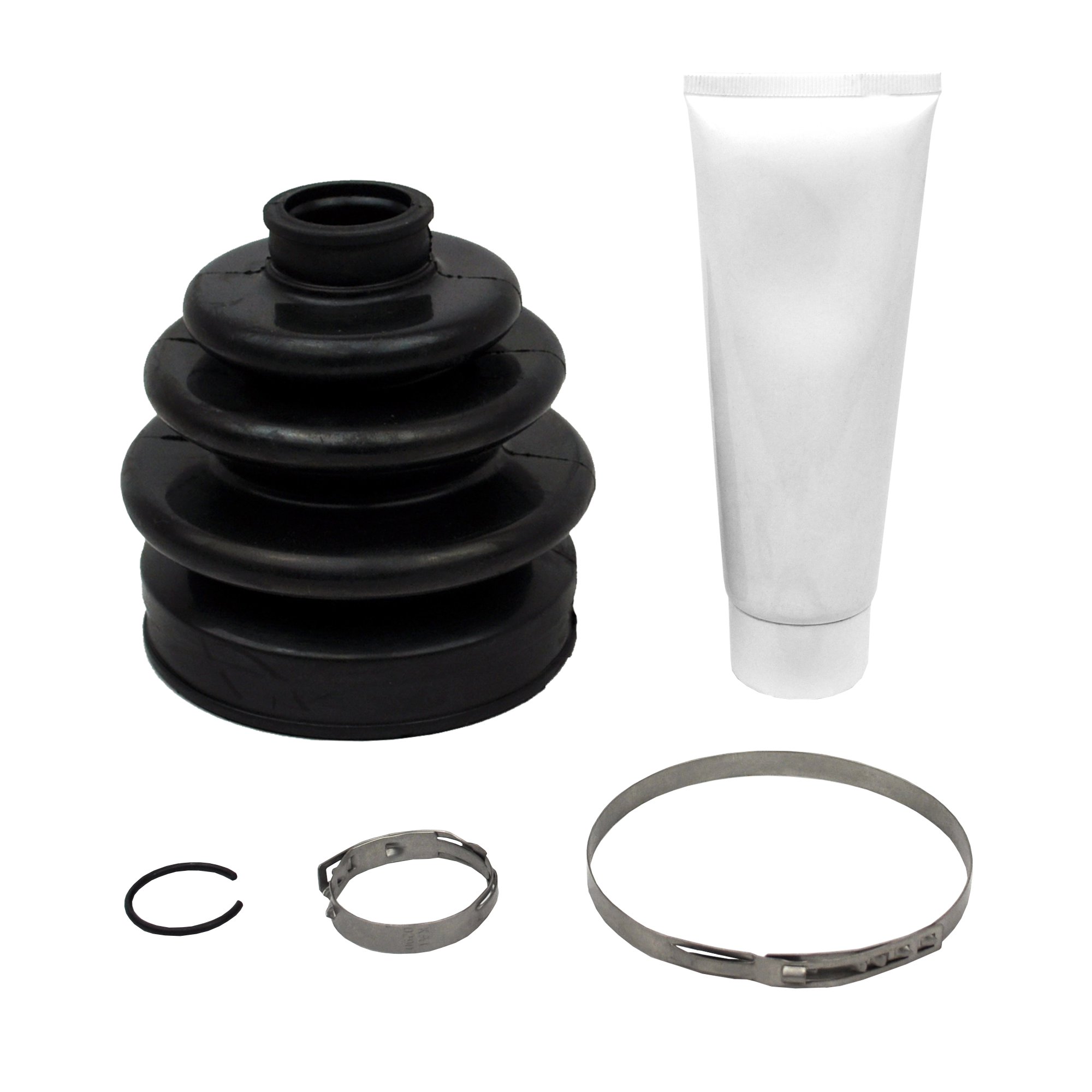
For riders who regularly put their UTV through mud, water, rocks, and other demanding environments, an XHD Boot Kit becomes part of the conversation about drivetrain protection.
The idea isn't complicated: protect the CV joint so the component inside can continue doing its job.
An XHD boot kit can be particularly relevant for riders who have already invested in stronger aftermarket axles or who regularly use their UTV in conditions that put additional stress on the drivetrain.
The important part is understanding that a heavy-duty drivetrain component and the protection around it work together. Installing a powerful axle while ignoring the component that helps protect its CV joint doesn't make much sense.
Mud Changes the Rules
Mud riding also creates another problem: you can't always see what is happening underneath the vehicle.
A thick layer of mud can cover suspension components and drivetrain areas almost instantly. Water can enter places you weren't expecting, while debris can collect around components that normally remain relatively clean.
That's why post-ride inspection matters.
After a serious mud ride, checking the CV boots for cuts, tears, loose clamps, or signs of grease leakage can help identify a problem before it turns into a trail-side failure.
It may not be the most exciting part of owning a UTV, but neither is waiting for a tow truck while your friends continue riding.
The Best Mud Riders Know What Happens After the Mud
The fun part of Mudstock is getting dirty. The smart part is knowing what that dirt can do.
Events like Mudstock demonstrate why UTVs are built differently from ordinary recreational vehicles. Riders aren't simply driving through puddles. They are deliberately putting machines into deep mud, water, and terrain designed to challenge them.
That kind of riding makes preparation and maintenance part of the experience.
Your tires may be the first thing to hit the mud, but they certainly aren't the last.
The real battle continues underneath the UTV, where grease, seals, boots, joints, and drivetrain components are working quietly while you look for the next mud hole.
And that may be the biggest lesson serious mud riding teaches:
The parts you don't think about during the ride are often the parts you should think about before it begins.


