





When you build a custom off-road rig, you invest heavily in the big, exciting upgrades: long-travel suspension, high-clearance A-arms, and massive, aggressive mud tires. But there is a tiny, inexpensive rubber component sitting right next to your wheels that holds the power to completely destroy your expensive heavy-duty axles: your CV boot.
If you are running a lifted setup or taking your machine through deep mud, sharp rocks, and thick brush, your factory CV boots are living on borrowed time. The moment a branch pokes a small hole or a steep suspension angle rips open the rubber, your axle joint is doomed.
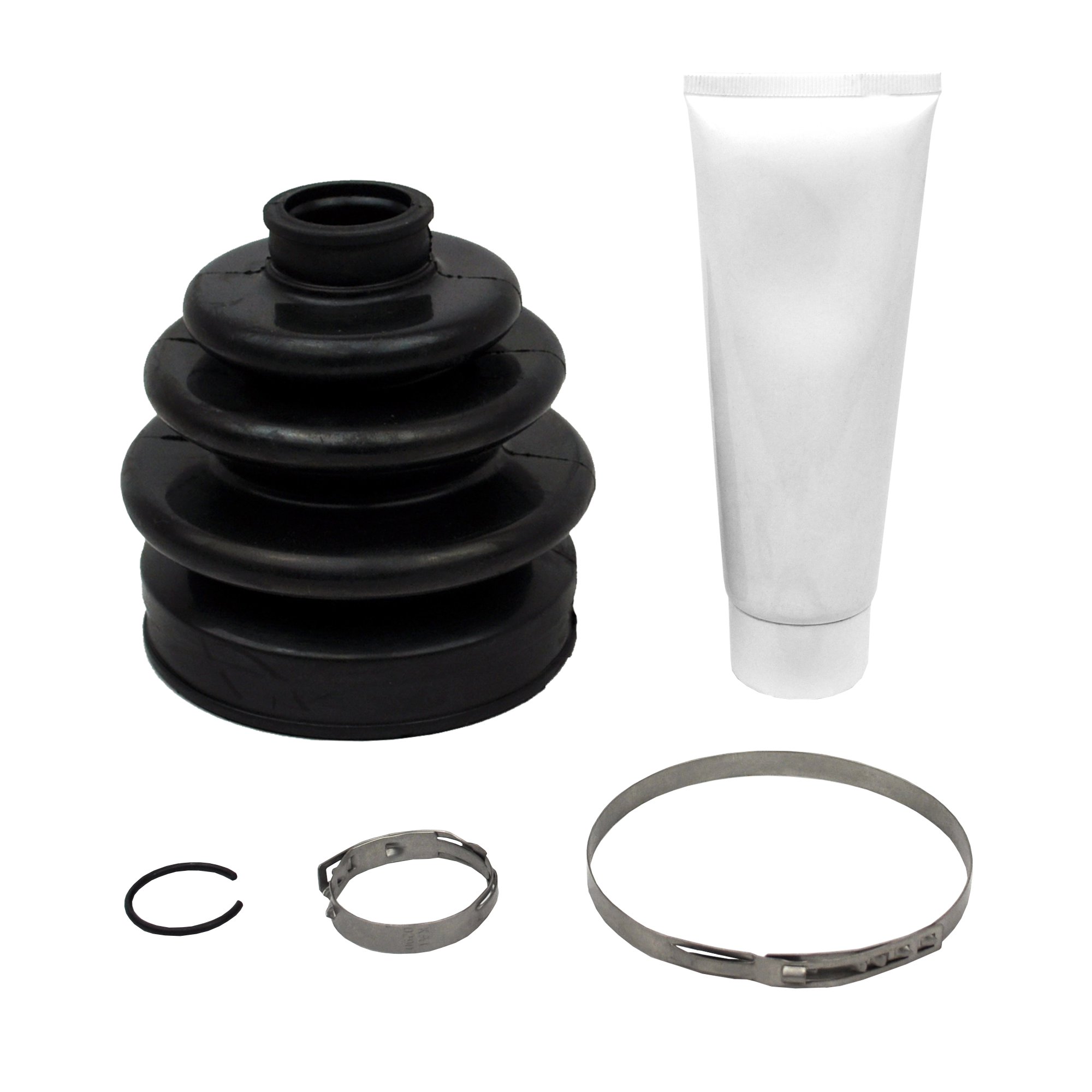
To protect your driveline from catastrophic failure, you need an HD Boot Kit upgrade. This guide breaks down exactly what a heavy-duty CV boot kit does, why your custom setup keeps tearing them, and how an upgrade saves your axles and your weekend rides.
To understand why you need an upgrade, you have to look at what this part does. A CV (constant velocity) boot is a flexible, accordion-style protective sleeve that wraps around the inner and outer joints of your drive axles.
An HD Boot Kit is a premium, heavy-duty replacement package that includes an ultra-tough boot, specialized high-temp molybdenum grease, and heavy-duty retaining clamps. It is engineered specifically to replace weak factory rubber with materials designed to survive extreme environments.
Seals in Critical Grease: Your CV joints contain precision ball bearings that must stay completely packed in grease to prevent friction, heat buildup, and metal-on-metal destruction. The boot keeps that grease locked inside the joint.
Keeps Contaminants Out: The boot acts as an airtight, watertight shield. It stops trail water, abrasive sand, liquid mud, and fine dust from entering the joint and grinding down the internal bearings.
Flexes Without Tearing: As your custom suspension travels up and down and your wheels turn, the boot constantly stretches, compresses, and twists while maintaining a flawless seal.
If you find yourself constantly replacing torn boots, it isn't just bad luck, it is a direct result of your vehicle modifications. Factory OEM boots are made from thin, everyday rubber designed for stock ride heights and casual trail driving. The second you build a custom off-road machine, you subject those boots to forces they were never engineered to handle.
When you install a lift kit or high-clearance suspension components, you change the operational angle of your axles. This forcing of the axle downward pulls the CV boot to its absolute physical limit. At these extreme, steep angles, the folds of a factory rubber boot constantly rub against each other under high rotational speeds. This friction creates intense heat, causing the rubber to dry out, crack, and split open along the seams.

Custom rigs are meant to go deep into rugged terrain. When you push through thick brush, submerged logs, or sharp rock fields, your CV boots are completely exposed. Thin factory rubber easily punctures when hit by a sharp stick or flying trail debris. Once a tiny tear starts, the spinning motion of the axle quickly rips the boot completely in half.
When you add high-horsepower tunes or larger tires, your axles spin with incredible force. At high speeds, cheap factory rubber boots suffer from "ballooning" centrifugal force causes the rubber to expand outward. This stretching makes the material even thinner and brings it dangerously close to making contact with your A-arms or brake lines, leading to instant tearing.
An HD Boot Kit fixes these engineering flaws by completely changing the material composition of the boot. Instead of cheap, thin rubber, heavy-duty boots are manufactured from premium Thermoplastic Polyester Elastomer (TPE) or high-grade Neoprene compounds.
These advanced materials offer massive advantages for a modified custom setup:
Puncture and Tear Resistance: TPE is incredibly dense and tough. It behaves like a mix of hard plastic and flexible rubber, making it highly resistant to sharp sticks, rocks, and trail debris.
Extreme Temperature Tolerance: HD boots handle the intense heat generated by high axle angles without melting or becoming brittle, and they won't crack in freezing winter conditions.
Superior Flexibility at High Angles: The accordion bellows on an HD boot are specifically engineered with optimized spacing to prevent the folds from rubbing against each other, even when your suspension is fully dropped.
Leave a comment