





Every Honda ATV or UTV leaves the factory with an axle that is designed to do exactly what the machine was built for. It transfers power from the differential to the wheels, handles everyday riding conditions, and delivers reliable performance for stock tires, factory suspension, and recreational trails.
But spend enough time around experienced riders and you'll hear a different term.
It sounds like a marketing name at first, but it actually describes something much more important. A performance axle isn't simply another replacement part. It is engineered for machines that have evolved beyond factory expectations. When the way you ride changes, the axle has to change with it.
That is why it earns a different name.
Whether you ride a Honda TRX, Honda Pioneer, Honda Rancher, Honda Rubicon, or another Honda ATV or UTV, the basic purpose of the axle never changes.
Its job is to deliver power smoothly from the drivetrain to the wheels while constantly moving with the suspension.
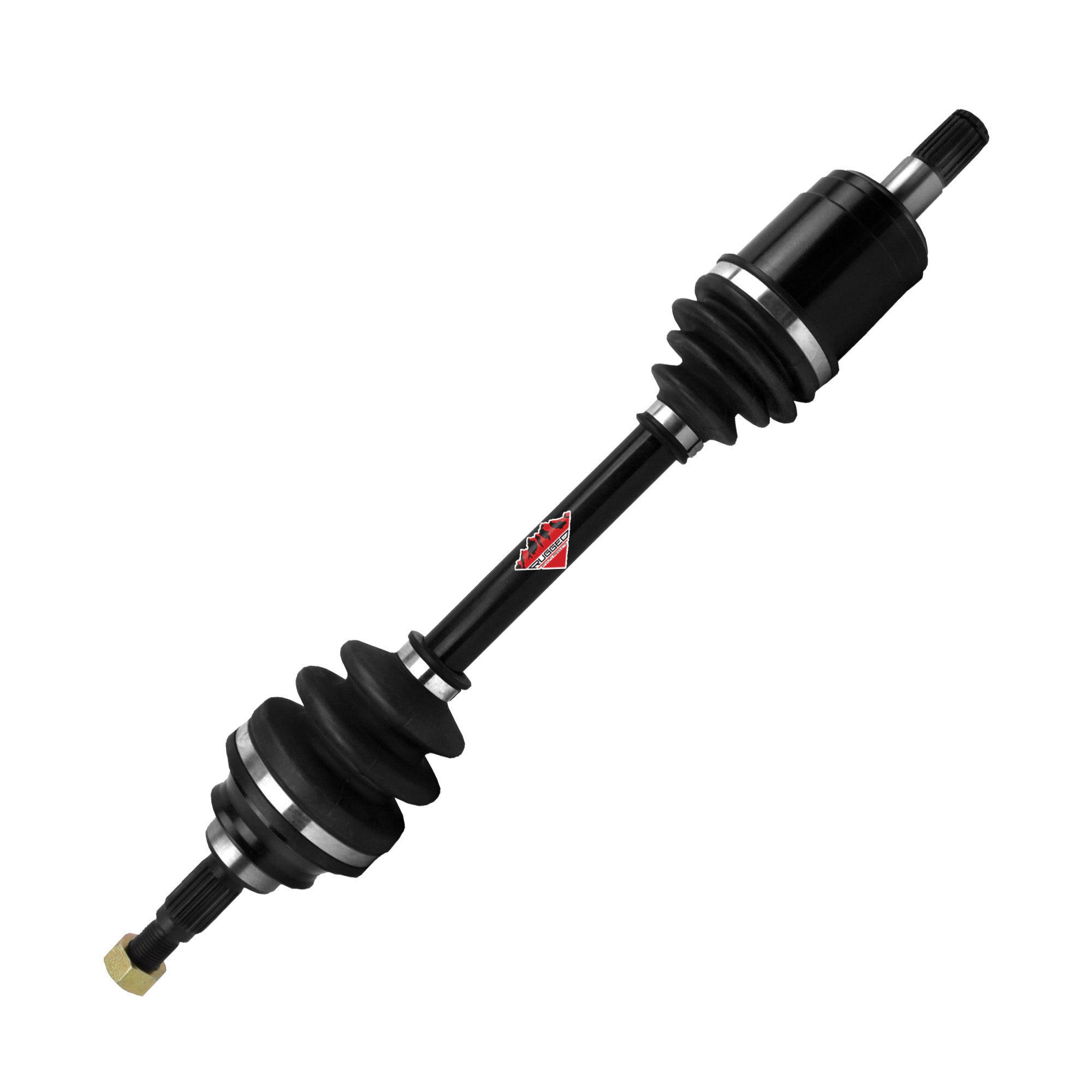
A stock axle performs exceptionally well within the conditions Honda designed the machine for. Trail riding, moderate terrain, and factory suspension geometry place predictable loads on the CV axle and CV joints.
But performance builds rarely stay within those limits.
Larger tires increase leverage.
More traction transfers greater force through the driveline.
Aggressive riding creates repeated shock loads.
Modified suspension changes axle articulation.
Suddenly, the axle is being asked to perform a very different job than the one it was originally designed to handle.
That is where the word "Performance" starts making sense.
Many riders hear the word performance and immediately think about horsepower, Bigger engines, ECU tunes, High-flow exhaust systems.
Those upgrades certainly improve performance, but they only create power.
Power means very little if the driveline cannot deliver it efficiently.
A Performance Axle focuses on what happens after the engine produces torque. Every launch, every climb, every acceleration out of a corner depends on the axle transferring that power consistently while dealing with suspension movement and changing terrain.
For Honda ATV and UTV owners who push their machines harder than average, that consistency becomes just as important as horsepower itself.
Performance is not always measured by speed.
Sometimes it is measured by confidence.
Not every Honda machine needs a performance axle. That is an important point many riders overlook.
The best axle is not automatically the strongest one. It is the one that matches the build.
As machines evolve, every modification changes the demands placed on the driveline.
Common upgrades include:
Each upgrade asks a little more from the ATV axle or UTV axle.
Individually, those changes may seem small.
Together, they create a machine that operates very differently from the factory version.
A performance axle exists because performance builds create performance demands.
From the outside, many axles appear similar.
That often leads riders to wonder why one is described as a Performance Axle while another is simply called a replacement axle.
The answer is found in the engineering.
Real performance is built into the parts you rarely see.
Performance axles are engineered to manage higher loads, repeated suspension movement, greater CV articulation, and more demanding riding conditions. The goal is not simply making the axle stronger.
The goal is helping the entire driveline remain reliable while the machine operates beyond stock conditions.
That becomes especially important for riders using their Honda ATV or UTV in rocky terrain, deep mud, technical climbs, or high-speed trail systems where every component experiences continuous stress.
The stronger the overall build becomes, the more every component must support the next.

One of the biggest mistakes riders make is choosing an axle based only on product names.
Instead, they should listen to the machine.
Your build usually tells you the answer before the product description does.
If your Honda still runs factory-sized tires, stock suspension, and recreational trails, a standard replacement axle may continue serving the machine well.
But if the build has evolved with larger tires, suspension upgrades, increased traction, and more demanding terrain, the axle begins carrying responsibilities it never had before.
That is exactly why performance axles exist.
Not because standard axles are poor.
But because some machines eventually outgrow them.
Every modification should improve the machine as a whole.
Installing larger tires while leaving the driveline unchanged creates imbalance. Increasing traction without considering power delivery creates unnecessary stress. Upgrading suspension without matching the axle changes how every component works together.
The best Honda ATV and UTV builds are never defined by a single upgrade.
They are defined by balance.
A Performance Axle is not called "performance" simply because it sounds impressive.
It earns that name by supporting the way performance-oriented machines are actually built and ridden. When the driveline matches the capability of the rest of the machine, every upgrade works together instead of competing against one another.
That is the real difference between an axle and a Performance Axle.
And that is why the name matters.
Leave a comment