





Your ATV or UTV suspension takes a beating every time you leave the pavement. Rocks, ruts, mud, jumps, hard turns, and uneven trails all put stress on the components that keep your wheels moving in the right direction.
One component that can get overlooked during routine maintenance is the ball joint.
Ball joints connect the suspension and steering components while allowing the wheel assembly to move as the suspension travels and the steering turns. When they begin to wear, you may notice changes in steering, handling, or suspension performance.
So, when should you upgrade your ATV or UTV ball joints?
The answer depends on how you ride, how your machine is configured, and the condition of your current ball joints.
A ball joint provides a flexible connection between suspension components and the steering knuckle or hub assembly. It allows controlled movement as your suspension travels while helping maintain proper wheel movement.
That makes the ball joint an important part of both ATV and UTV suspension systems.
When everything is working correctly, you probably won't think much about the ball joints. But when wear develops, the symptoms can become noticeable.
Excessive play, unusual movement, steering changes, or clunking noises can all be signs that your ball joints need attention.
Not every ATV or UTV experiences the same amount of stress.
A machine used primarily for light trail riding may put less demand on its suspension components than a machine regularly used for mud riding, rock crawling, racing, jumping, or aggressive trail riding.
If you frequently push your machine hard, inspecting your ball joints should become part of your regular maintenance routine.
Repeated impacts and rough terrain can increase the loads placed on suspension components. Over time, that can contribute to wear.
If you're noticing more movement or looseness around the suspension or wheel assembly, don't ignore it.
Upgrading your ATV or UTV with larger or more aggressive tires can change how the machine interacts with the terrain.
Larger tires can provide additional ground clearance and traction, but they can also alter the loads experienced by suspension and steering components.
This is one reason modified ATVs and UTVs should be inspected carefully after major upgrades.
If you've added larger tires, lifted the machine, changed suspension components, or significantly changed the way you ride, your original ball joints may be worth a closer inspection.
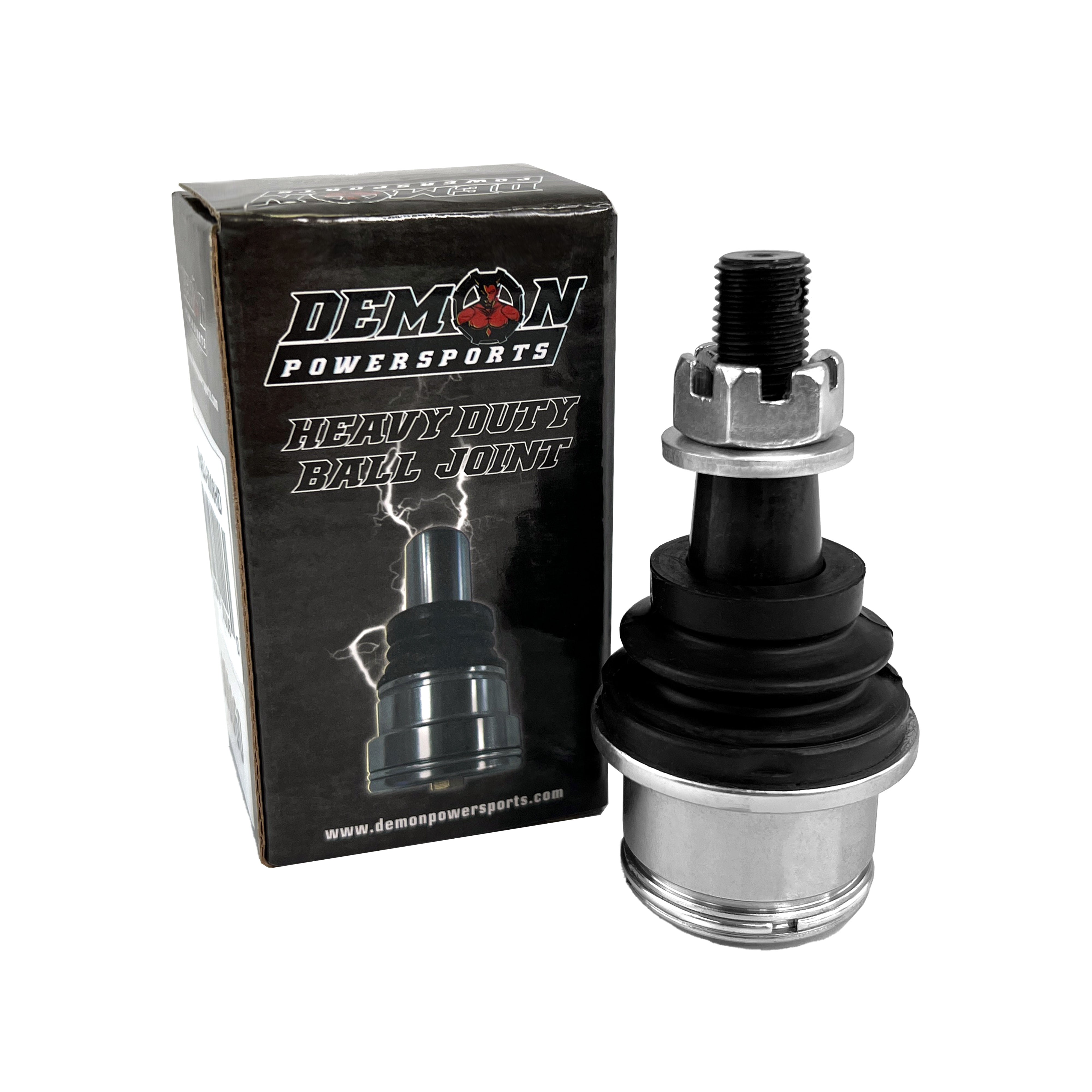
An HD Ball Joint can be an option for riders looking to strengthen this part of their suspension setup.
You don't have to wait for a complete failure before inspecting your ball joints.
Watch for signs such as:
Some of these symptoms can also be caused by other worn components, including tie rods, wheel bearings, bushings, or steering parts.
That's why it's important to inspect the complete suspension and steering system instead of assuming the ball joint is automatically the problem.
An HD ball joint can make sense when your ATV or UTV is being used in conditions that demand more from the suspension.
For riders who regularly tackle rough trails or operate modified machines, upgrading suspension components can be part of building a more durable setup.
A heavy-duty ball joint is designed with durability and demanding use in mind. It can complement other upgrades such as heavy-duty axles, tie rods, suspension components, and larger tires.
However, an HD component isn't a substitute for proper maintenance. Even heavy-duty parts need regular inspection, correct installation, and appropriate use.
One of the easiest ways to make an off-road trip frustrating is discovering a worn suspension component after you've already reached the trail.
Before your next major ride, put your ATV or UTV on a flat surface and inspect the suspension. Look for visible damage, unusual movement, and signs of wear.
If you're unsure about the condition of a ball joint, have it inspected before putting the machine through another demanding ride.
Replacing a worn component in the garage is far easier than dealing with a suspension problem miles from your trailer.
There isn't one specific mileage number that tells every ATV or UTV owner when to replace or upgrade a ball joint. Riding conditions, vehicle modifications, maintenance, terrain, and riding style all play a role.
If your machine is stock and lightly used, regular inspection may be all that's needed. But if you're running larger tires, riding aggressively, or frequently tackling rough terrain, upgrading to an HD Ball Joint can be a practical addition to your suspension setup.
Your ball joints may not be the most noticeable parts on your ATV or UTV, but they play an important role in how the suspension and steering work together.
Leave a comment