





A long-travel suspension setup can completely change the way a Polaris RZR performs off-road. More suspension travel, a wider stance, increased clearance, and improved stability can make a noticeable difference when the trail gets rough. But there is more to a long-travel upgrade than installing wider suspension arms.
Once you change the suspension geometry, other components have to work with that new setup. Your axles are one of the most important parts to consider because they must transfer power while moving through the additional suspension travel and operating angles.
A long-travel axle is designed to give your Polaris more suspension movement while generally increasing its track width. Depending on the kit, this can also provide additional clearance for larger tires and improve stability on uneven terrain.
For example, High Lifter's Polaris RZR XP 1000 long-travel kit increases track width and suspension travel while using upgraded suspension components and double-plunging axles.
That additional movement is exactly why the axle needs attention.
An axle that works properly with a factory suspension configuration may not have the same range of movement required by a long-travel setup. As the suspension moves through its cycle, the axle has to accommodate changes in position and operating angle without binding or putting unnecessary stress on the CV joints.
One of the biggest mistakes when building a long-travel Polaris is treating the axle as an afterthought.
Long-travel suspension can change the distance and geometry between the differential and wheel hub. This means axle length, plunge capability, CV articulation, and overall fitment become important considerations.
Its specifically states that its Polaris RZR XP long-travel axles are designed for its long-travel kit, with larger shafts and CVs and 40°+ articulation.
The important takeaway is simple: long-travel suspension and axles need to work as a system.
Before choosing an axle, verify the exact Polaris model, year, suspension configuration, and long-travel kit it needs to work with.
As your suspension moves through greater ranges of travel, the CV joints can operate at larger angles. The axle still needs to deliver power while accommodating that movement.
Operating at an unsuitable angle can increase heat and stress within the joint. Long-travel-specific axle designs therefore focus on providing the articulation and plunge needed for the application.
Long-travel axle information highlights high-angle operation and specifically connects its axle design to the additional movement created by long-travel suspension.
This is particularly important for riders who regularly push their Polaris through rocks, whoops, deep ruts, steep terrain, or other conditions that keep the suspension working hard.
Long-travel suspension is also about width.
Increasing the track width can improve stability and change how the machine behaves when cornering or crossing uneven terrain. High Lifter, for example, describes its RZR long-travel setup as providing a wider stance, increased travel, additional clearance, and changes to suspension geometry.
But increased width also means the supporting components need to be selected for the new configuration.
That includes axles, tie rods, radius rods, wheels, tires, and potentially shocks or other suspension components depending on the specific kit.
Many riders install long-travel suspension because they want to run larger tires or improve their machine's ability to handle demanding terrain.
However, larger tires can add additional load to the drivetrain and suspension. When combined with aggressive riding and increased suspension travel, the demands placed on the axle can become even greater.
This is why simply asking whether an axle is "heavy duty" isn't enough. The more important question is whether the axle is designed for your specific long-travel application.
For riders building a Polaris specifically for aggressive off-road use, a race-spec axle is designed around more demanding requirements than a basic replacement axle.
The Polaris Xtreme Heavy Duty Long Travel Axle Race Spec is designed for riders who need an axle solution suited to long-travel applications. It provides an option for Polaris owners who have moved beyond the factory suspension configuration and need their axle setup to match their upgraded suspension.
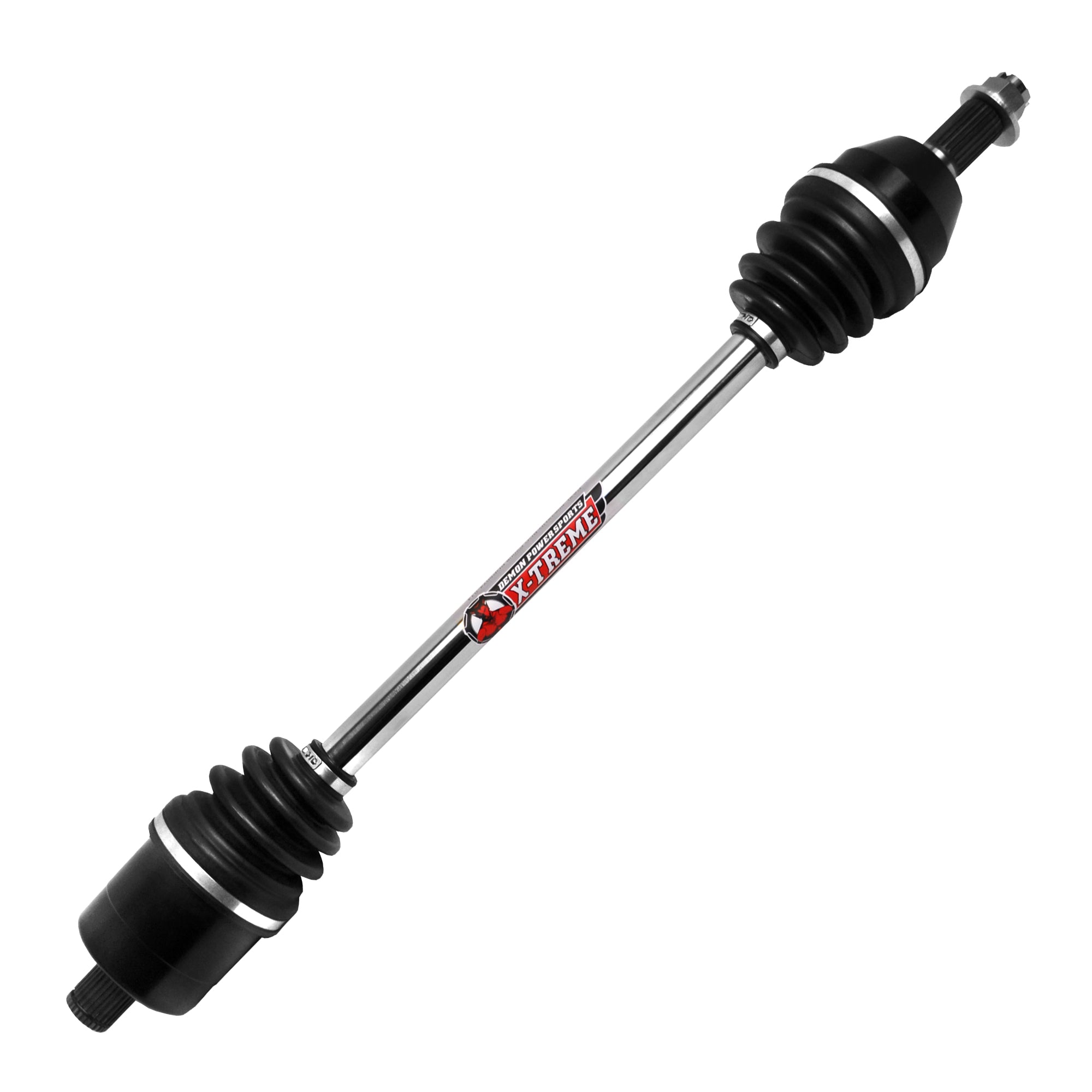
As with any suspension modification, verify exact fitment before ordering. A long-travel axle should match the specific Polaris model and suspension configuration rather than being selected based only on the vehicle name.
Upgrading a Polaris to long travel is not simply about adding wider suspension arms. It changes how the vehicle moves, how much the suspension travels, and how supporting components operate.
That is why the axle should be considered at the same time as the suspension kit. Check axle length, plunge capability, CV articulation, tire size, wheel setup, and the exact application before making an upgrade.
A properly matched long-travel setup allows the suspension and drivetrain components to work together rather than forcing one component to compensate for another.
Leave a comment