

The starting line of a desert race is a place of pure, unfiltered anticipation. The smell of high-octane race fuel cuts through the dry August air, engines idle with a nervous, rhythmic rumble, and the horizon stretches out into an unforgiving expanse of dust, rock, and heat. When the green flag drops for Vegas to Reno - running this August 13th through the 16th, 2026 - hundreds of racers will embark on one of the most punishing off-road endurance challenges in North America.
Organized by the legendary Best In The Desert (BITD) racing association, Vegas to Reno is renowned as the longest off-road race in the United States. Spanning over 500 miles of brutal Nevada terrain, this event isn't just a test of driver skill and stamina; it is the ultimate crucible for side-by-side mechanical endurance. You can have the most powerful engine and the fastest reaction times on the grid, but if your UTV’s undercarriage is not fortified for the abuse, the desert will quickly and mercilessly claim another DNF (Did Not Finish).
To cross the finish line in Dayton, you do not just need speed - you need survival tactics. Whether you are running a fully built Can-Am Maverick tearing down aggressive downhill mountain descents or navigating the blinding silt beds in a Polaris RZR, the Nevada desert demands respect.
If you are gearing up for the race, or simply building a machine capable of surviving that level of high-speed desert abuse on your own weekend rides, bracing your driveline, suspension, and steering is non-negotiable. Here is your essential UTV survival guide, focusing on the heavy-duty (HD) upgrades you need before the green flag drops.
The Brutal Reality of the Nevada Desert
Vegas to Reno is famous for its high-speed dry lake beds, but that is only a fraction of the story. The reality of this race involves navigating miles of blinding silt that hides chassis-breaking boulders, hammering through deep, square-edged washouts, and enduring hours of relentless washboard chatter.
When your UTV hits a buried rock at 60 MPH, the transfer of kinetic energy is violent. Factory OEM parts are engineered to a price point and designed for recreational trail riding. Under the sustained, extreme torsional loads and direct impacts of desert racing, standard factory components act as fuses. They will bend, snap, or shear, usually at the worst possible moment. Upgrading to Heavy-Duty (HD) components changes the math, giving your UTV the structural integrity required to absorb the desert’s punishment and keep rolling.
Survival Essential 1: HD Axles
Your axles are the literal driving force of your machine, tasked with transferring massive amounts of horsepower from the transmission to the wheels while constantly articulating through suspension travel. In the desert, heat and extreme angles are an axle’s worst enemies. As you blast through deep whoop sections, your suspension drops out to full extension. If you are on the throttle when the tires slam back into the dirt, the torque spike sent through the driveline is catastrophic for a standard CV joint or axle shaft.
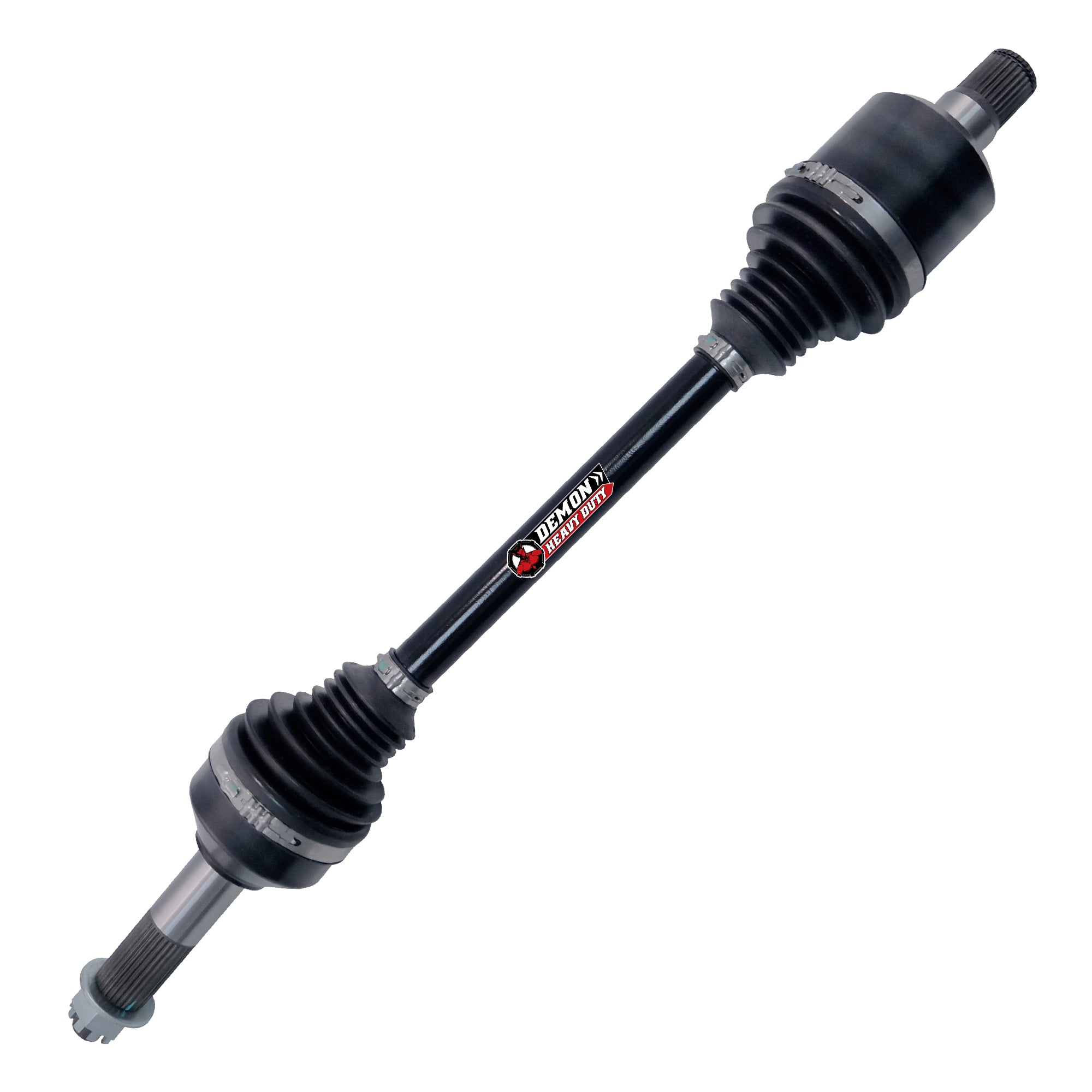
Upgrading to HD Axles is the first step in desert-proofing your driveline. HD Axles are typically manufactured from high-strength materials like 4340 Chromoly steel, which offers a significantly higher tensile strength than stock carbon steel. The CV joints are oversized and re-engineered to handle extreme articulation angles without binding or overheating. When you are miles from the nearest pit stop, knowing your driveline can handle the shock-loads of desert whoops gives you the confidence to keep the pedal pinned.
Survival Essential 2: HD Ball Joints
The front suspension of your side-by-side takes the brunt of every impact. Every rut, rock, and G-out transfers extreme force directly through the ball joints. In a race like Vegas to Reno, stock ball joints are notorious for shearing at the stud or pulling entirely out of the housing, resulting in a collapsed front suspension and a highly dangerous loss of control at high speeds.

Replacing your factory units with Heavy Duty Ball Joints is a mandatory insurance policy for desert survival. HD variants are drastically overbuilt compared to OEM. They feature hardened, heat-treated chromoly studs that resist shearing under heavy lateral impacts. Furthermore, the internal housings are reinforced, often utilizing adjustable tension plates so you can keep the joint tight and slop-free as the miles rack up. When you are carving through high-speed sweepers and need your front end to stay planted, HD ball joints ensure your wheels stay securely attached to the A-arms, no matter how hard you case a ditch.
Survival Essential 3: XHD Tie Rods
Imagine driving blind into a cloud of hanging dust (a guarantee in desert racing) and clipping a half-buried rock with your front right tire. The impact forces the tire outward instantly. If you are running stock steering components, the hollow aluminum or thin steel tie rod will buckle like a dry twig. Your wheel will toe out completely, your steering wheel will rip out of your hands, and your race is over.
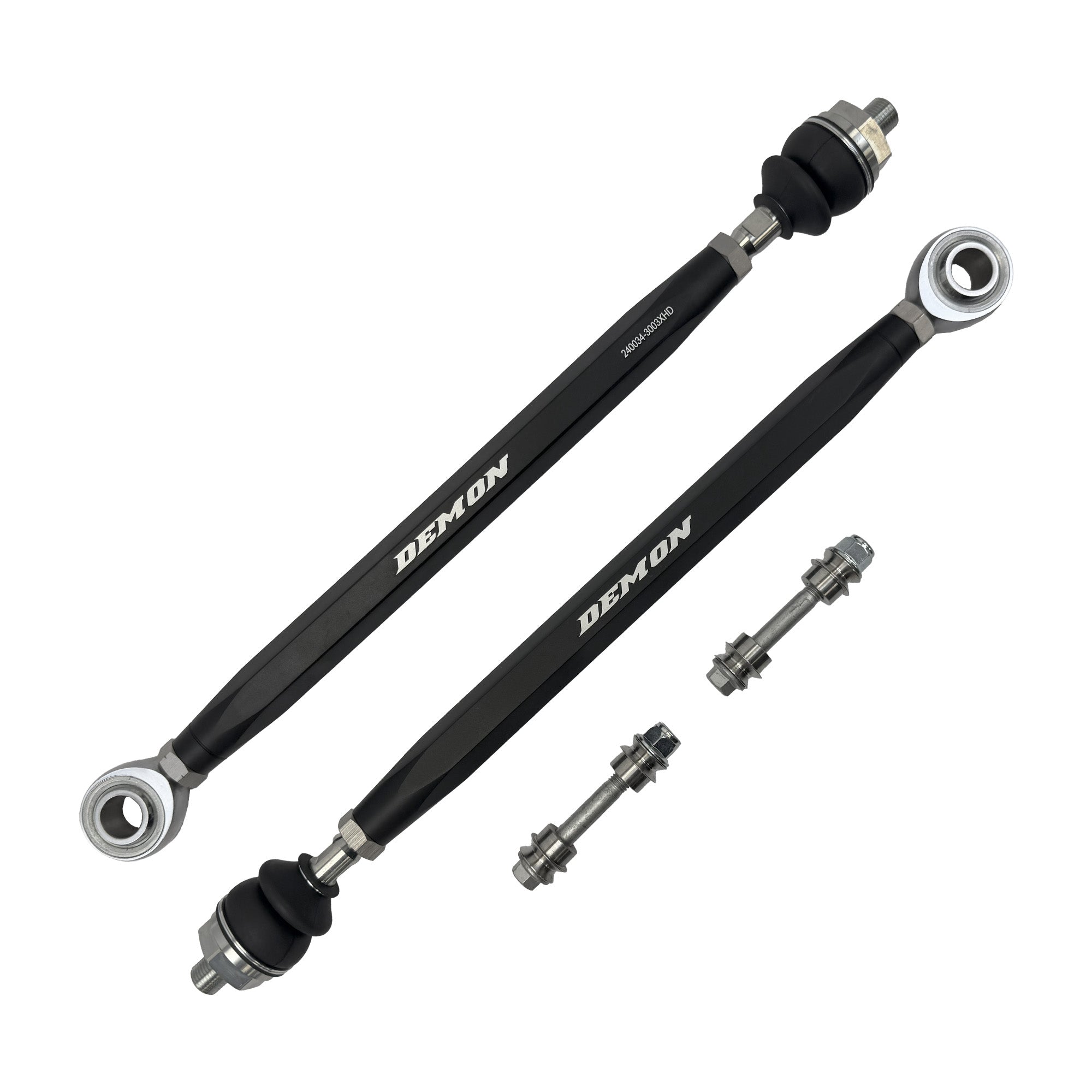
XHD Tie Rods prevent this exact scenario. Upgrading your steering system with solid-stock chromoly or thick-walled heavy-duty aluminum tie rods ensures that steering feedback remains crisp and your wheels point exactly where you tell them to. Many HD Tie Rod kits also replace the weak factory outer tie rod ends with heavy-duty heim joints (spherical bearings) and hardened clevises at the steering rack. This locks your steering geometry in place, eliminating the dead zone in the steering wheel and ensuring that even if you clip a boulder, your steering linkage will not fold under the pressure.
Preparing for the Green Flag
Vegas to Reno is not just a race against other drivers; it is a battle of attrition against the Nevada landscape. The desert does not care about your horsepower, your paint job, or your sponsor decals. It only respects preparation.
Those who cross the finish line after 500 miles do so because they anticipated the abuse and reinforced their machines accordingly. Upgrading your vulnerable factory components to an HD Axle, HD Tie Rod, and HD Ball Joint setup transforms your UTV from a recreational vehicle into a desert-capable weapon. As the dust settles this August, the racers who took the time to meticulously prep their driveline and suspension will be the ones celebrating at the finish line, while the rest are left waiting for a tow truck in the silt.


