





You have just spent the entire weekend in the garage. You bolted on a brand-new lift kit, mounted a heavy set of aggressive mud tires, and finally dropped the floor jack. Your machine now looks like an absolute beast. Whether you are building a dedicated mud-bogging rig or outfitting a 2017–2025 Ranger 570 Full-Size for rocky overland trails, that extra ground clearance feels like a massive victory. It is the exact upgrade you needed to clear deep ruts and navigate over massive boulders without bottoming out.
However, as soon as you roll out of the garage and hit the trails, a hidden countdown begins. While your machine looks trail-ready, you might have just set yourself up for a catastrophic mechanical failure.
The biggest mistake Polaris ATV and UTV riders make after installing a HD lift kit isn't choosing the wrong brand of lift or picking the wrong tire size. The biggest mistake is completely ignoring the axles. A lift kit is only half of the suspension upgrade equation. If you increase your ride height without upgrading your drivetrain to match, your factory stock axles will inevitably fail, usually at the worst possible moment on the trail.

To understand why stock axles snap after a lift kit installation, you have to look at the mechanical geometry of your Polaris UTV or ATV. Polaris engineers spend thousands of hours designing the OEM suspension and drivetrain to operate within a very specific, optimized range of motion.
When your machine rolls off the factory floor, the stock axles and Constant Velocity (CV) joints sit at a relatively flat, neutral angle. This neutral geometry allows the engine's power to transfer smoothly from the differential to the wheel hubs with minimal friction.
When you install a bracket lift, portal gear lift, or long-travel suspension kit, you are physically pushing the wheel hubs further down and away from the differentials. This drastic change increases the operating angle of the CV joints. Factory axles are simply not designed to articulate at extreme angles. When they are forced to spin at a steep downward slope, the internal components of the CV joint—the cage, the ball bearings, and the race—begin to bind. This phenomenon, known as "axle bind," generates an immense amount of friction and heat, rapidly degrading the structural integrity of the steel.
Axle bind is dangerous on its own, but lift kits are almost never installed in isolation. The primary reason riders lift their Polaris ATV or UTV is to make room for larger, heavier aftermarket tires. This creates a mechanical double threat for your factory axles.

First, you have the severe CV angles causing internal friction. Second, you have the massive increase in rotational mass and traction. A set of 32-inch or 34-inch aggressive mud tires weighs significantly more than your stock setup. When you are deep in a mud hole and hit the throttle, your engine sends a massive surge of torque through the axle shaft.
If those heavy tires suddenly find hard traction like catching a submerged rock or tree root while spinning, the shock load transfers directly backward into the drivetrain. Because the stock axle is already compromised by the steep angle of the lift kit, it becomes the weakest link in the chain. The OEM shaft acts like a mechanical fuse; it twists, shears, and violently snaps in half, leaving you stranded with three-wheel drive and a hefty towing bill.
An HD Lift Kit Axle is designed for machines that no longer operate within factory suspension geometry. Rather than simply replacing a worn-out axle, it is engineered to perform with the increased operating angles commonly created by lifted suspensions.
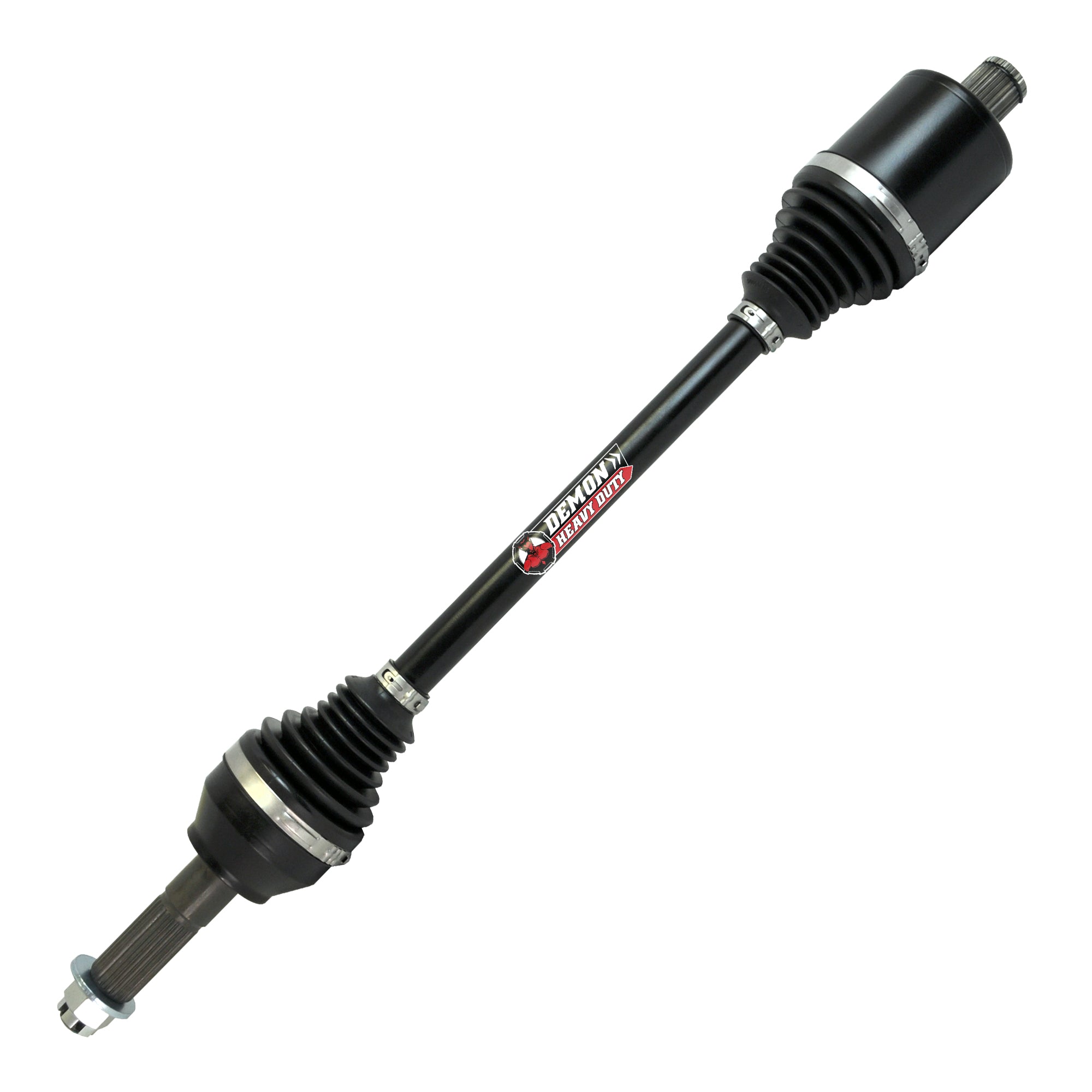
A lift kit changes the environment. An HD Lift Kit Axle is built for it.
These axles are designed to support riders who regularly use:
The goal is not simply making the axle stronger.
The goal is helping the driveline work more naturally after the suspension has been modified.
Many riders assume axle problems are simply part of owning a lifted machine.
In reality, the machine is often telling you that one component has fallen behind the rest of the build.
Common signs include:
The best upgrade is rarely the biggest one. It is the one that keeps every part working together.
A balanced build always performs better than one with a single oversized modification.
The solution to this problem is not to remove your lift kit. The solution is to finish the build properly. If you change the geometry of your Polaris UTV or ATV, you must upgrade the mechanical components that handle the torque.
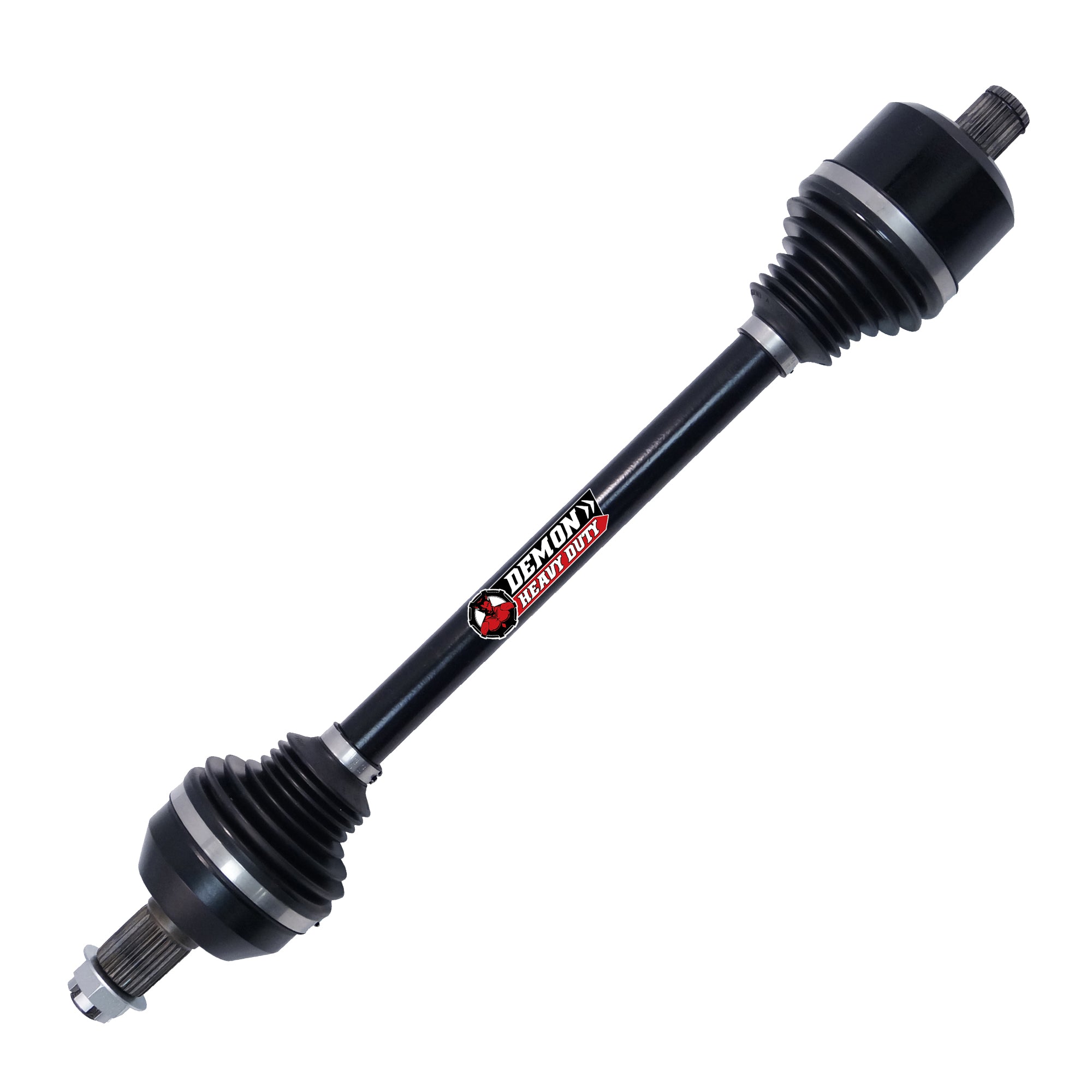
Heavy-duty aftermarket axles are engineered specifically to handle the stress of lifted suspension geometries. Unlike standard OEM shafts, premium heavy-duty options are forged from high-strength 4340 chromoly steel, making them vastly more resistant to twisting and shearing under heavy shock loads.
More importantly, heavy-duty aftermarket axles feature redesigned CV joints. For example, upgrading to an XHD Long Travel Axle Race Spec provides a dual-plunge design and oversized internal cages. These specialized CV joints are machined to articulate at much steeper angles without binding, allowing your lifted suspension to fully droop and compress smoothly. They accommodate the extreme geometry of the lift kit while delivering uninterrupted power to your oversized tires.
When you invest in a lift kit, you are committing to altering the fundamental mechanics of your machine. Treat your drivetrain with the same respect you give your suspension. By pairing your lift with high-performance aftermarket axles, you eliminate the weakest link, protect your investment, and ensure that your Polaris is truly ready for whatever the trail throws at it.
Leave a comment