

When riders talk about upgrades on an ATV or UTV, most think about bigger tires, lift kits, or heavy-duty axles. But there is one upgrade that does not add speed or looks. It adds survival.
A Heavy Duty Winch is not a performance upgrade. It is a recovery tool that decides whether your ride continues or ends in the middle of a trail, mud hole, or deep off-road recovery situation.
Why every ATV and UTV needs a Heavy Duty Winch
Off-road riding is unpredictable. Even experienced riders get stuck in situations where throttle does nothing and tires only dig deeper.
A HD winch becomes the only way out when:
-
- The machine sinks into deep mud
- The rear wheels lose traction on uphill climbs
- The UTV gets high centered on rocks or ruts
- The trail becomes too soft to reverse out of
Without a HD winch, you depend on another rider being nearby. In many riding areas, that is not guaranteed.
Most common ATV and UTV HD winch sizes riders actually use
Heavy Duty Winch size is one of the most searched topics because riders are confused about power vs machine size.
Like:
-
- 2500 lb ATV winch for small ATV
- 3500 lb winch Polaris Sportsman
- 3500 lb winch Can Am Outlander
- 4500 lb UTV winch Polaris Ranger
- 4500 lb winch Can Am Defender
- 6000 lb winch side by side heavy duty
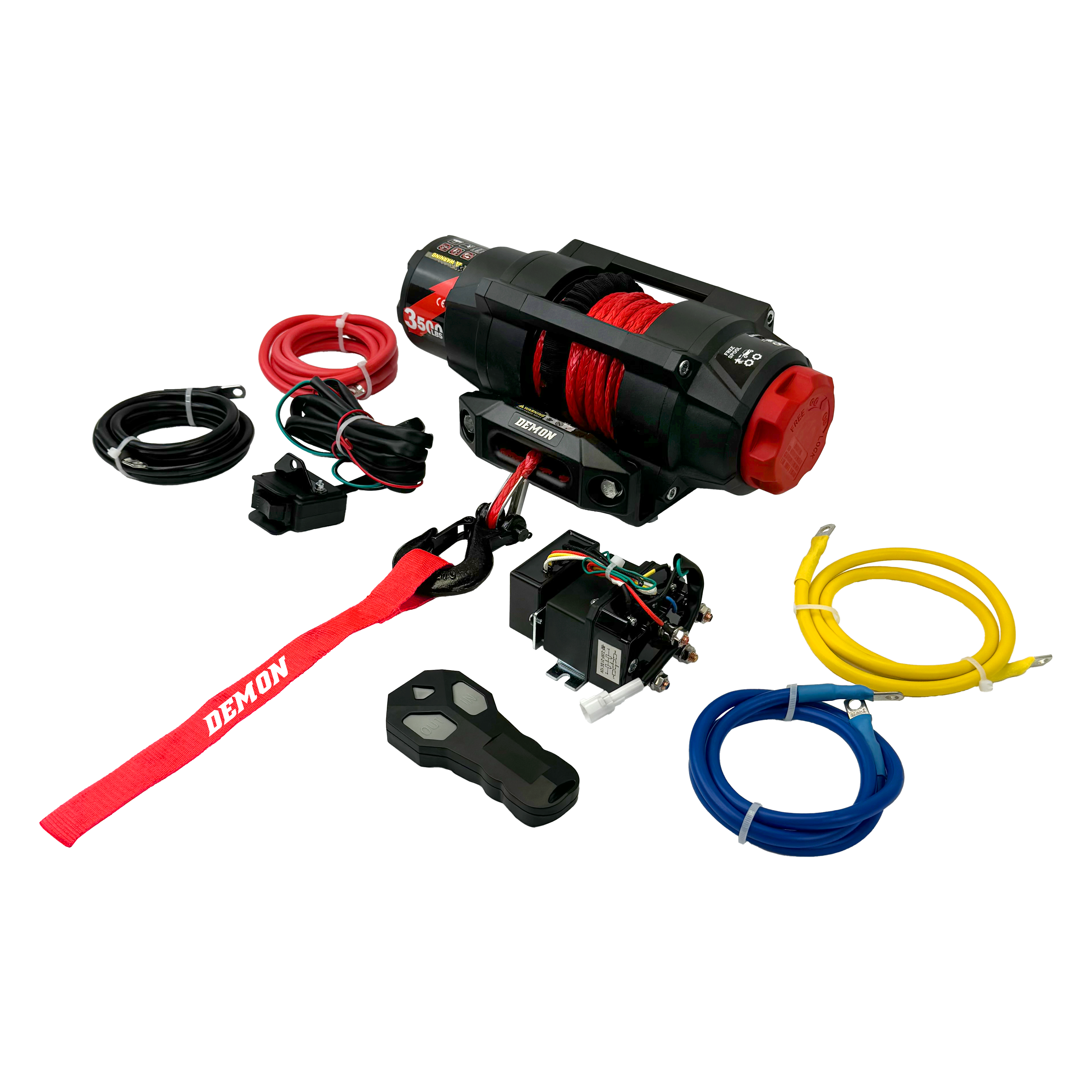
Industry use patterns show:
2500 lb winch
Used for smaller ATVs, light trail riding, and basic recovery
3500 lb winch
Most common ATV winch size for Polaris, Honda, Yamaha, Can Am ATVs. This is the standard recovery range for riders who hit mud, water, and trail obstacles
4500 lb winch
Used on heavier ATVs and most UTVs. This is common for Polaris Ranger, Can Am Defender, and utility focused machines
6000 lb winch
Used for heavy UTV builds, mud riders, four seat machines, and loaded utility work
Most riders fall into the 3500 lb to 4500 lb range depending on machine weight and terrain
Which winch is best for your ride
The right winch is not about brand first. It is about matching machine weight and riding style.
For ATV riders like:
-
- Polaris Sportsman
- Yamaha Grizzly
- Honda Foreman
- Can Am Outlander
A 2500 lb to 3500 lb winch is the normal setup. Most riders prefer 3500 lb because it gives extra safety margin in deep mud.
For UTV riders like:
-
- Polaris Ranger
- Polaris RZR
- Can Am Maverick
- Can Am Defender
- Yamaha Wolverine
A 3500 lb to 4500 lb winch is the standard setup. Heavier machines and mud riders lean toward 4500 lb for stronger recovery pulls.
For heavy use or deep mud builds:
6000 lb winch is used when machines carry extra weight, cargo, or larger tire setups.
How a Heavy Duty Winch actually saves your ride when you are stuck alone
Most riders do not think about winch operation until they are already stuck. The process is simple but critical.
When your ATV or UTV is stuck:
First step is to stop spinning wheels, Spinning only makes the machine sink deeper
Next step is to find a stable anchor point, This can be a tree, rock, or another vehicle
Then:
-
- Unwind the winch cable slowly
- Hook the winch line securely to anchor point
- Keep tension on the line without sudden jerksUse short controlled pulls instead of full power pulls
The winch should pull the machine forward slowly while wheels assist lightly if possible. The goal is recovery, not force.
In real trail situations, riders often search like:
-
- how to use ATV winch when stuck alone
- UTV winch recovery steps mud
- Polaris winch recovery instructions trail
- Can Am winch stuck out of mud guide
These situations are exactly why winches are considered essential equipment, not optional accessories.
How to properly set up a Heavy Duty Winch on ATV or UTV
A winch setup is not just mounting the unit. Proper installation determines how safely it performs under load.
Basic setup process includes:
Mounting the winch to a compatible winch plate designed for your ATV or UTV model
-
- Routing power cables directly to the battery
- Installing relay or contactor for power control
- Securing fairlead aligned with cable direction
- Testing spool direction before first use

Popular setup searches include:
-
- Polaris Ranger winch installation kit
- Can Am Maverick winch mounting plate
- ATV winch wiring diagram 12v system
- UTV winch synthetic rope setup guide
Incorrect setup leads to weak pulls, overheating, or cable failure under load.
Why a winch is not an upgrade you notice until you need it
Unlike performance parts, a winch does not change how your machine rides every day. It sits silent until the moment everything goes wrong.
When that moment comes, it becomes the only system that decides:
Whether you ride back out, Or stay stuck waiting for help
That is why experienced riders always install a winch before they ever need one.


