

Reliable steering is essential when your John Deere machine is working around the property, navigating uneven ground, or tackling demanding outdoor conditions. Every turn depends on the steering system working together correctly, and the tie rod end plays an important role in that process.
Over time, regular use, impacts, dirt, and moisture can contribute to wear in steering joints. If your John Deere Buck ATV or UTV develops loose steering or unusual front-end movement, inspecting the tie rod ends is a sensible place to start.
The John Deere Buck Rugged Tie Rod End from Demon Powersports offers a replacement option designed to support steering function and dependable performance.
What Does a Tie Rod End Do on a John Deere?
A tie rod end connects the steering linkage to the wheel assembly, allowing steering movement to reach the wheels while accommodating the movement required by the suspension.
When you turn the steering wheel, the steering rack and tie rods work together to change the direction of the front wheels. The tie rod ends provide the pivoting connection needed for this movement.
Because these joints operate close to the wheels, they are exposed to vibration, dirt, water, and repeated steering loads. Maintaining them helps preserve steering accuracy and supports safe vehicle operation.
For John Deere Buck owners, checking the steering linkage periodically can help identify wear before it develops into a more serious problem.
Signs Your John Deere Tie Rod End May Need Replacement
A worn tie rod end can affect how your machine responds to steering inputs. Watch for these common warning signs:
1. Loose or imprecise steering
Excessive movement in a steering joint can create noticeable play. If the steering wheel moves before the front wheels respond, inspect the steering linkage for wear.
2. Unusual knocking or clicking sounds
Worn joints may produce noises when steering or moving over uneven ground. Other steering and suspension components can cause similar symptoms, so inspect the complete assembly before replacing a part.
3. Uneven tire wear
Incorrect toe alignment can cause irregular tire wear. Worn tie rod ends may contribute to alignment problems, although tire pressure, wheel alignment, and other suspension components should also be checked.
4. Visible damage or excessive joint movement
Inspect the tie rod ends for damaged protective boots, corrosion, loose hardware, or movement beyond the joint's normal range. Any noticeable looseness deserves attention.
If you suspect a steering component is damaged, stop operating the machine until it has been inspected and repaired. Steering faults can affect vehicle control.
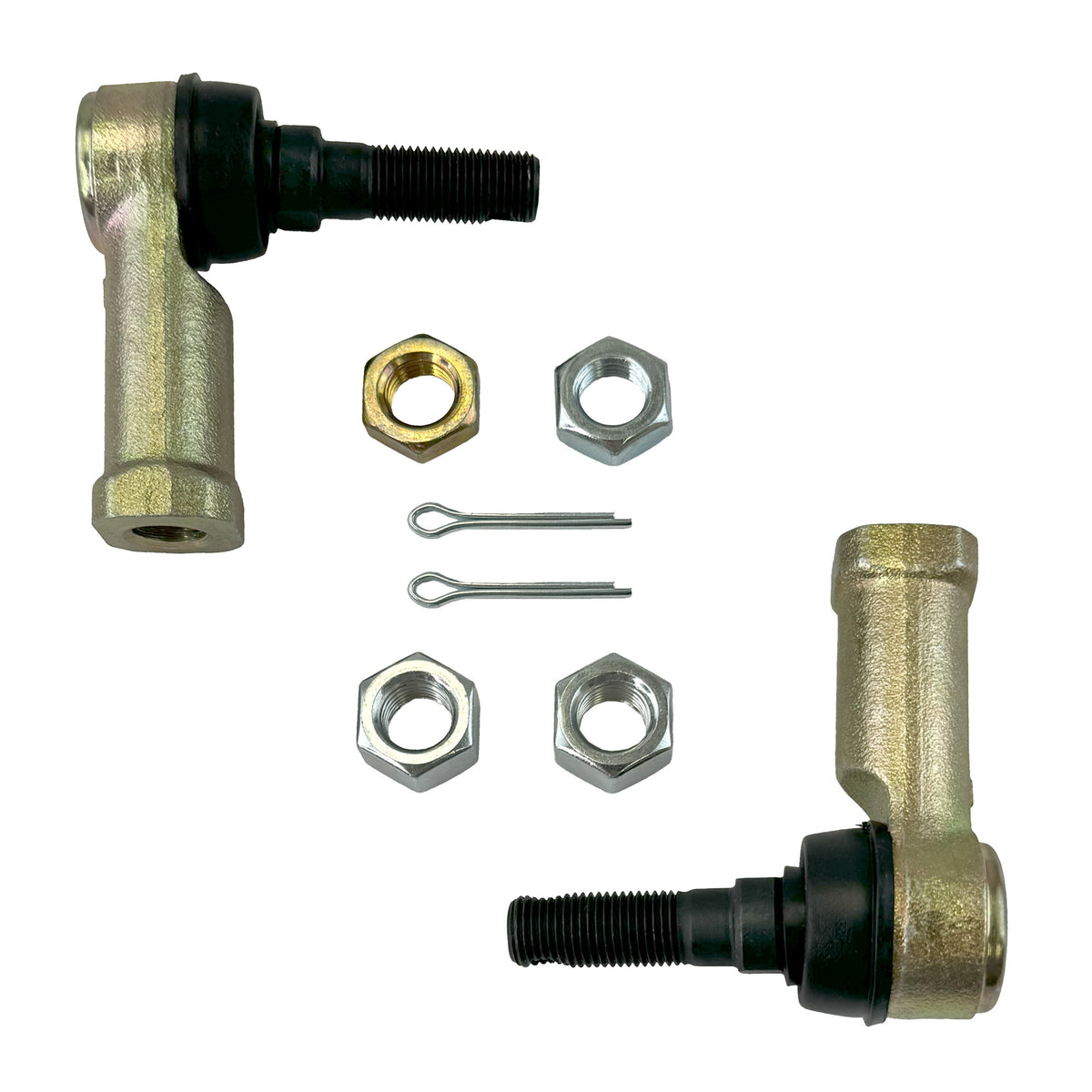
Why Choose the John Deere Buck Rugged Tie Rod End?
When replacing a worn steering component, the replacement's construction and compatibility matter. The Rugged Tie Rod End for John Deere Buck combines several design features intended for dependable service.
-
-
Direct stock-length replacement: Designed as a stock-length replacement option for compatible applications.
-
Heavy-duty billet aluminum rod: Provides a substantial rod construction for the steering assembly.
-
Chromoly steel tie rod end and heim joint: Uses chromoly steel components at the joint connection.
-
Protective hardware finish: Chrome- and zinc-plated hardware helps protect against corrosion.
-
These features make the product worth considering when servicing a compatible John Deere Buck steering system. Choosing the correct replacement helps ensure the steering linkage can operate as intended without introducing unnecessary fitment or alignment problems.
Product specifications and compatibility should always be confirmed before ordering.
How to Choose the Correct John Deere Tie Rod End
Not every John Deere ATV or UTV uses the same steering components. Model differences, production years, and steering configurations can affect replacement-part compatibility.
Before purchasing a John Deere tie rod end, verify your machine's exact model and year. Compare the listed fitment with your existing component, including its connection points and required dimensions.
It is also important to determine whether the problem is isolated to the tie rod end or involves the tie rod, steering rack, wheel bearings, or other suspension components. Replacing the wrong part will not resolve the underlying issue.
After installation, follow the manufacturer's service instructions for fastener torque and steering adjustment. Check alignment as required and verify that the steering operates smoothly before returning the machine to service.


