





Your Can-Am can have the horsepower, suspension, tires, and drivetrain to handle serious off-road riding. But every time you accelerate harder, eventually you have to slow down.
That is where your brake pads become one of the most important components on the machine.
Mud, sand, rocks, steep descents, repeated braking, and aggressive trail riding can put considerably more demand on the braking system than a casual ride around the property. The question is not simply whether your Can-Am brakes work. It is whether your brake pads can keep delivering consistent braking performance when you keep pushing the machine.
Off-road riding rarely gives your brakes an easy life.
A steep downhill section may require repeated braking. A muddy trail can make stopping conditions unpredictable. Bigger tires can change the demands placed on the braking system, while aggressive riding can mean braking repeatedly as you approach corners, obstacles, hills, and technical sections.
Heat is another part of the equation.
As brake pads operate repeatedly, temperatures can rise. If the pads cannot maintain consistent friction as temperatures increase, brake fade can become a concern. That can change how the brake pedal feels and, more importantly, how confidently you can control the machine.
Demon Powersports notes that its sintered brake pads are built for consistent friction across a broad temperature range and reduced brake fade at high temperatures.
Brake pads usually do not announce that they are reaching the end of their useful life with a single dramatic failure.
Instead, changes can develop gradually.
You may notice that braking does not feel as strong as it used to, the machine requires more pedal input, or braking performance becomes less consistent after repeated hard stops. Unusual noise or visibly worn friction material can also be reasons to inspect the pads.
These signs should not automatically be blamed on the brake pads alone. Rotors, calipers, fluid, hardware, and other parts of the braking system also need to be checked when braking performance changes.
But if the pads are worn or no longer appropriate for the way you ride, replacing them with a more suitable pad compound can make sense.
Demon's Can-Am brake pads use a high-density sintered metallic material containing metallic elements including copper, tin, and graphite. The material is designed to provide consistent friction and stable braking across different operating temperatures.
They are also designed to perform in conditions that ATV and UTV riders regularly encounter, including wet, muddy, dusty, and sandy environments. Demon states that the sintered construction is designed to provide instant braking performance and longer service life compared with carbon, Kevlar, semi-metallic, and other organic pad materials.
For a Can-Am that spends its time on demanding trails rather than gentle pavement, those characteristics matter.
Choosing a heavy-duty brake pad is not about assuming that your factory brakes will immediately fail. It is about matching the braking component to the way the machine is actually being used.
A Can-Am used for occasional easy trail rides has different demands from one regularly running through mud, sand, hills, technical terrain, or aggressive riding conditions.
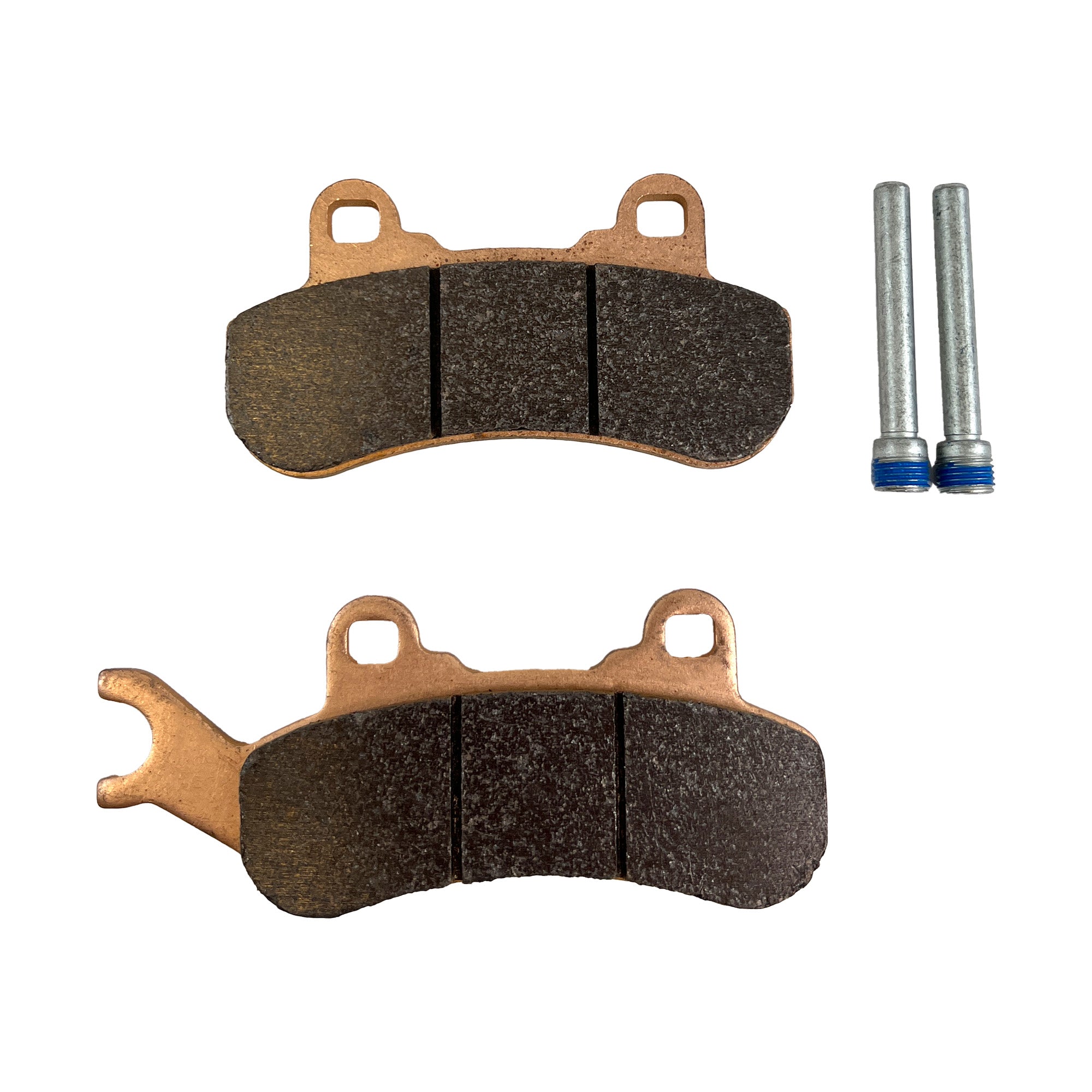
Demon offers sintered brake pad applications across multiple Can-Am models, including the Maverick X3, Maverick Sport, Maverick Max, Defender, Renegade, Outlander, and other applications, with fitment varying by year, model, and brake position.
Internal link placement: Link the first relevant mention of Can-Am Heavy Duty Brake Pads to the appropriate Demon Powersports product or brake-pad collection page.
There is no single number of miles or riding hours that tells you exactly when brake pads will fail.
Terrain, riding style, machine setup, braking habits, and maintenance all influence brake-pad life. That is why regular inspection matters more than waiting for a specific mileage interval.
Before your next serious ride, inspect the brake pads and rotors, check the brake system for obvious issues, and pay attention to any change in braking feel.
Your Can-Am may be built to go faster, climb harder, and tackle rougher terrain.
But every serious ride eventually comes down to one question: when you need to stop, will your brake pads be ready?
Leave a comment